
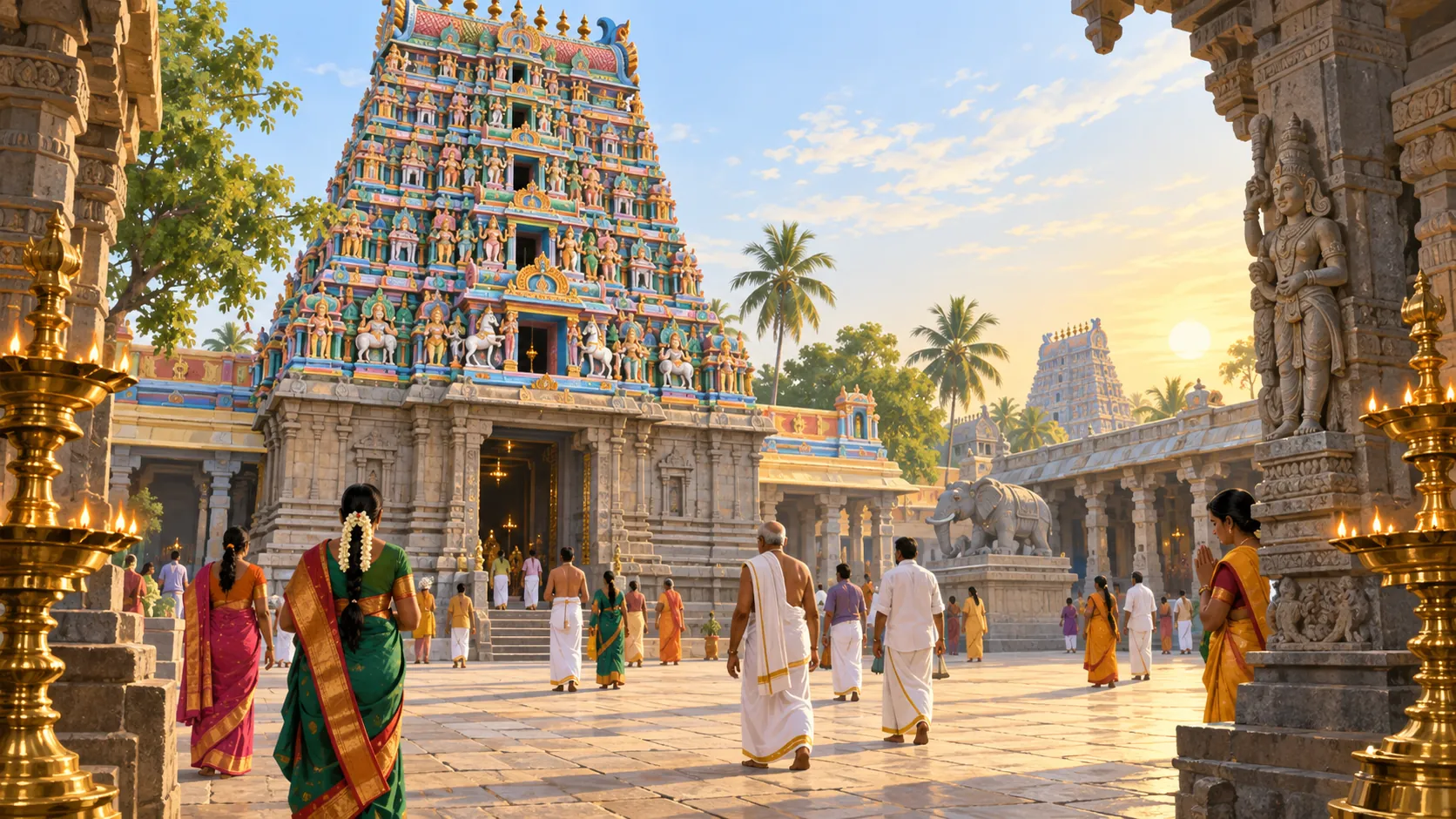
A living temple, not a museum
The Meenakshi Amman Temple is the heart of Madurai, and it is full of daily worship. The complex covers a large area with several entrances and tall gopurams covered in painted figures. Visitors are welcome, but the place works on temple time rather than tourist time.
Plan for a slow visit. You will spend as much time waiting, watching and walking as looking, and that is part of the experience.
Dress for the temple
The temple's own visitor guidance recommends modest dress with shoulders and knees covered. Several sources mention that traditional Indian clothing is preferred, and that shorts and sleeveless tops are not allowed. Footwear is left outside.
Pack a light cotton outfit that covers your legs and shoulders. If you are caught short, shops near the entrance often sell scarves or shawls, but it is easier to arrive prepared. Rules can change, so check the official temple site before you travel.
Mind the two opening windows
The temple opens in the morning and again in the afternoon, with a break in the middle of the day. Published timings show roughly 5 AM to 12:30 PM and 4 PM to 10 PM, and festival days can change the schedule. Confirm the current times on the temple's official page.
Early morning and the first part of the evening are often calmer than midday. Weekday mornings are usually quieter than weekends. Avoid the afternoon break if you are hoping to enter, and leave extra time on festival days.
What to look for
The towers, the Hall of a Thousand Pillars and the golden lotus tank are the usual highlights. Take time to look up at the gopurams and to walk slowly through the carved halls. Some inner shrines are for worshippers only, and non-Hindus may not be allowed in certain areas.
Follow the signs and the guidance of staff. If you are unsure whether an area is open to you, ask rather than assume. Photography rules differ in different parts of the complex, so check before you take out a camera.
Make it a half-day
Madurai is hot for much of the year. A temple visit followed by a rest, a meal and a late-afternoon walk is more comfortable than a long, hurried day.
Carry water, protect your head from the sun while outside and keep your bag small. A simple south Indian meal nearby is a good way to end the visit.
Know the small rules
Visitors usually leave footwear at a designated counter before the temple gate, so socks are not a substitute. Mobile phones and cameras have been restricted in parts of the complex in the past, and storage counters are offered for these items. Rules are set by the temple administration and can change, so check the official visitor page before you go.
Plan to carry little. A small bag, a bottle of water and a scarf are enough. Keep money and your phone in a zipped pocket in crowded halls, and keep children close to you in the queues.
Take your time with the details
The sculpted pillars, painted ceilings and tall towers reward slow looking. Many visitors come for the main shrines, but the corridors and the tank are where the quieter moments are. Evening ceremonies draw crowds, and standing back at the edge of a hall often gives a better view than pushing forward.
If you want to understand what you are seeing, ask the temple's official guide desk about authorised guides, or read an official leaflet beforehand. Avoid anyone who insists on a paid tour at the gate. A calm, curious visit goes further than a long list of sights.
Find out more about ZikPe
Explore ZikPe on its official website. Check the current product information and terms there before choosing a payment service for your trip.
Explore the ZikPe app ↗