Let the Taj be a visit, not a deadline
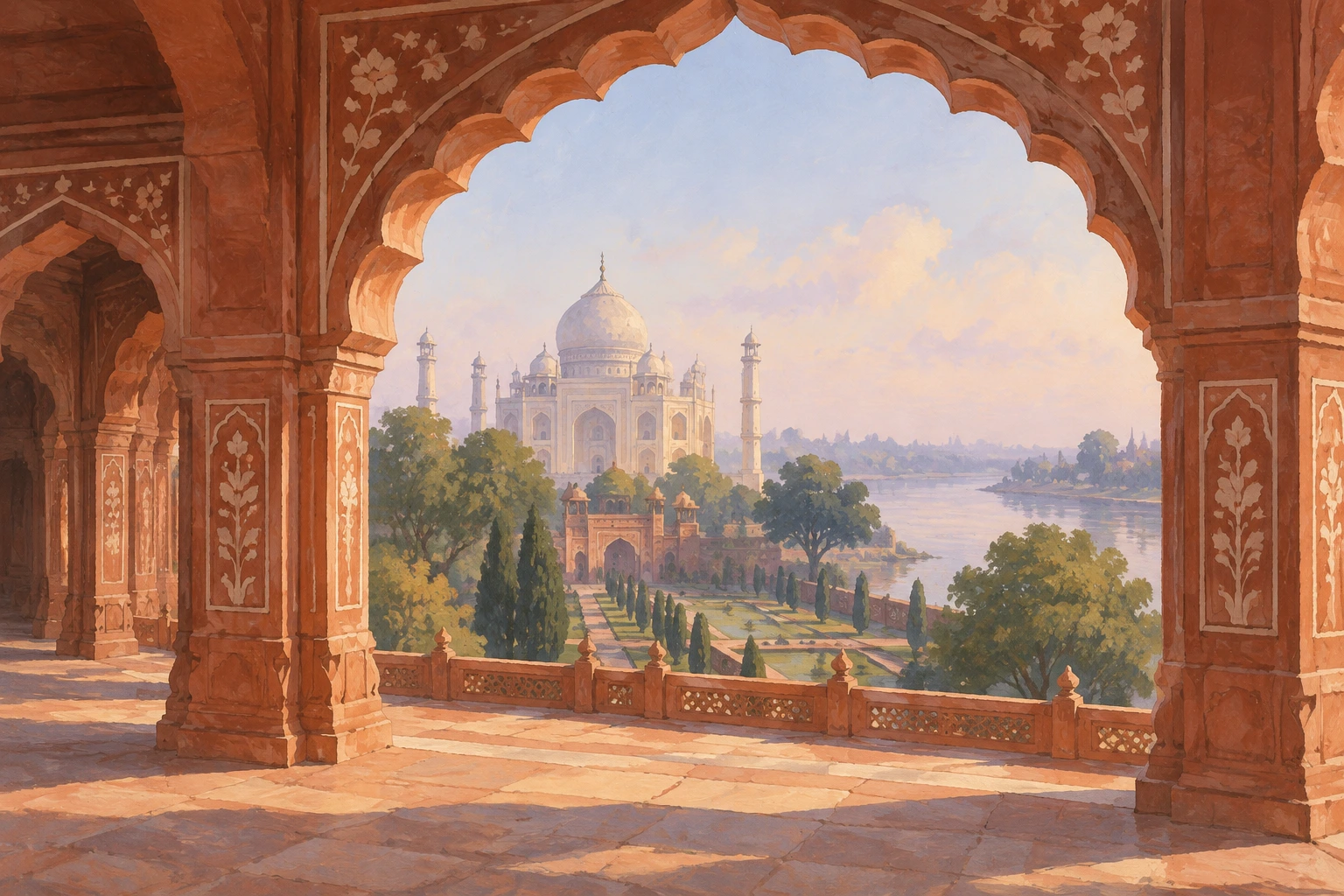
The mistake is to treat Agra as a photograph squeezed between two trains. The Taj Mahal deserves the unhurried part of your day: time to enter, adjust to the scale of the garden and look at how the marble changes against the sky. A rushed arrival followed by an immediate departure leaves little room for the building itself.
Choose your visit around the official opening rules rather than a promised empty hour. The Taj is closed on Fridays for general viewing. Normal visiting hours run from before sunrise to before sunset, but confirm the current notice and your ticket before travelling. Sunrise is a choice, not a guarantee of solitude or perfect visibility.
Agra Fort tells a different story
Agra Fort is the second main anchor. Its red sandstone defences and palace spaces shift the visit from a garden tomb to the machinery of a royal capital. Look at the transition between outer walls, courtyards and the more delicate interiors instead of searching only for the next Taj viewpoint.
Do not assume the Taj ticket is your Fort ticket. Entry categories, included areas and charges need checking through the official booking channel. Leave a meal and a rest between the two monuments if the heat is wearing you down. A slower Fort visit is worth more than a third stop completed through exhaustion.
Choose one smaller site
Itimad-ud-Daulah offers another way to study a Mughal tomb, without simply repeating the Taj visit. Sikandra, the site of Akbar's tomb, is a different choice again. Select the one that fits the route from your accommodation and the energy you have left. Neither needs to become a compulsory badge.
Mehtab Bagh can be a garden stop across the river, but a clear Taj view depends on conditions and access. Do not build the emotional finish of the trip around a guaranteed sunset photograph. The garden is a place to visit; the light is something you receive if the day allows it.
Give Fatehpur Sikri a separate window
Fatehpur Sikri belongs in the plan as a journey, not as an extra monument supposedly around the corner. Its imperial buildings and the religious precinct make a substantial outing beyond Agra. Arrange the return transport before you go, and keep time for walking, heat and the different entry arrangements.
The mosque precinct is a place of worship as well as a historic site. Follow local directions on shoes, dress and photography. At any monument, agree a guide's fee and scope before starting, and use the recognised entry route rather than an unsolicited claim that you need a special shortcut.
A plan that survives the actual day
With two days, use the first for the Taj and Fort, with a proper break. Use the second for Fatehpur Sikri or for a smaller Agra site and a gentler city afternoon. With only one day, cut the distant outing rather than compressing everything.
Keep security rules, permitted bags and ticket identity requirements in your final check. Monument fees can depend on visitor category; an NRI should not assume a domestic rate without reading the applicable rules. The best Agra plan leaves enough space to notice the place, not merely to prove you reached it.
A quieter Agra visit can be a place of worship
Agra's heritage is wider than a list of monument tickets. Incredible India's city guide includes Shri Mankameshwar Mandir and Gurdwara Guru ka Tal alongside its better-known historic sites. A visit to a living place of worship asks for a different pace from a museum route: observe the people using it, not only the building around them.
Choose one such stop because you want to understand that part of the city. It does not need to become a hurried religious circuit. Leave room to follow local guidance and to step aside when worship or a gathering takes priority over sightseeing.
Guru ka Taal: approach as a guest
Agra's district administration places Guru ka Taal at Sikandra and links the Sikh shrine to Guru Tegh Bahadur Ji. It also describes surviving carved sandstone towers from the historic water reservoir beside the site. The setting brings built heritage and a living religious community together, rather than presenting an empty historic backdrop.
The district visitor guidance asks for a head covering and describes footwear deposit arrangements. Follow the directions at the entrance and ask before photographing worshippers or joining any activity. The page describes daily langar, but a community meal is not a tour-package inclusion or a promise of service at the exact moment you arrive.
Mankameshwar: give devotion its own space
The national tourism guide identifies Shri Mankameshwar Mandir as an Agra temple dedicated to Lord Shiva. That is enough to place it in a considered heritage plan without repeating unverified legends as dated historical fact or publishing a fixed ritual schedule from a travel listing.
Before visiting, confirm the current entry and worship arrangements. Ask locally about footwear, dress, photography and which spaces visitors may enter. Watch for the flow of devotees and avoid treating an interior as a photo location where everyone must move out of the way. Respectful attention can make a short visit worthwhile.
Do not confuse quiet with an empty itinerary
A spiritual stop need not be paired with every fort and tomb in the district on the same day. Choose the main monument visit, then decide whether a living shrine would add a different kind of understanding. If travel time or a gathering changes the plan, leave the extra stop for another visit.
Keep transport and return arrangements clear, especially when leaving the central sightseeing area. Check access needs before arrival and use current guidance at the site rather than assuming all religious buildings work the same way. The aim is a visit with context and consideration, not a count of places entered.
Sources and planning note
Find out more about ZikPe
Explore ZikPe on its official website. Check the current product information and terms there before choosing a payment service for your trip.
Explore the ZikPe app ↗