A valley before a gallery
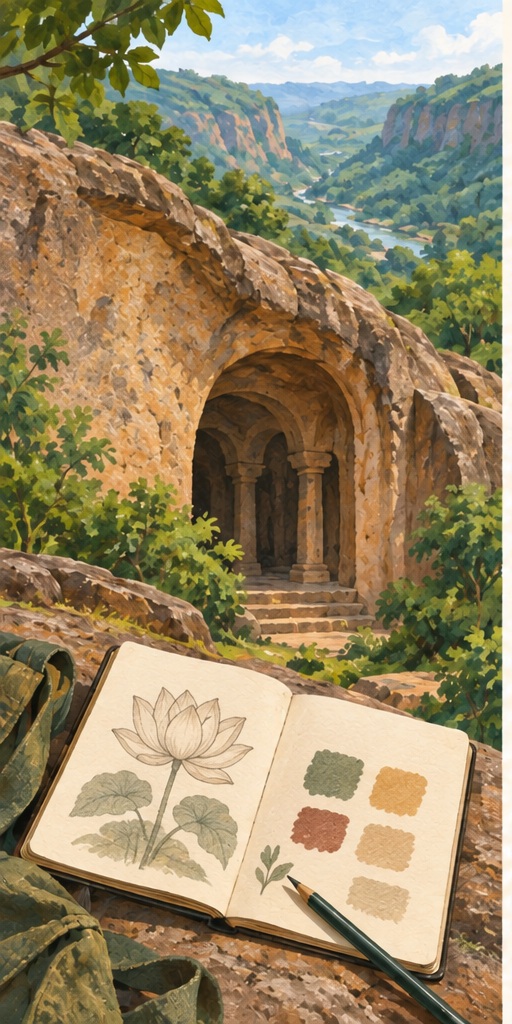
Ajanta is a group of Buddhist caves excavated into a cliff above the Waghora River in Maharashtra. The setting matters: these are not paintings gathered into a modern gallery, but spaces made from rock, with art belonging to the buildings around it. Take a moment to see the shape of the valley before concentrating on an individual doorway.
The work developed in two main phases, beginning in the second and first centuries BCE and continuing with a later phase in the fifth and sixth centuries CE. You do not need to remember every cave number to appreciate the difference between a room, a carved surface and a scene painted within it. Choose a manageable sequence rather than making thirty caves a personal target.
Two kinds of spaces
Ajanta includes chaityagrihas, or prayer halls, and viharas, or monastic spaces. In a prayer hall, notice the vaulted form, the columns and the stupa towards the rounded end. The arrangement gives the interior a direction and a rhythm. Seeing that whole shape helps before you begin examining smaller details.
The monastic spaces offer another way to look, with halls and cells that belonged to the life of the community. Later caves include more elaborate sculpture and decoration. Compare two interiors carefully and the differences become more useful than a fast sequence of entrances. A knowledgeable guide can help explain which features belong to which phase without making the visit a recital of dates.
Let the paintings hold your attention
The paintings are central to Ajanta's importance. Buddhist stories, including Jataka narratives, sit alongside figures and details that offer a view into the worlds imagined by the artists. Start with the composition: where the figures gather, what directs your eye and how a scene occupies the wall. Then look at a smaller detail that interests you.
Avoid treating every painted figure as something you can identify from a quick glance. Ask for an explanation where you want one, and distinguish a surviving image from a reconstruction of what it once looked like. The paintings have endured a long history, and their condition is part of what a visitor sees. You are looking at vulnerable material, not a surface made for endless close-up photographs.
Make room for the visit
Plan the transport and return separately from the time spent inside the caves. A journey from Chhatrapati Sambhajinagar is not simply a short city detour, and combining Ajanta with another major cave visit can leave little time for either. Maharashtra's tourism information lists Ajanta as closed on Mondays; recheck the current arrangements before choosing your day.
Ask what your transport quote includes, how waiting time is handled and where you will meet for the return. Check the current entry rules rather than using an old ticket price as a promise. Keep water, a meal break and comfortable footwear in the plan. Stairs and uneven surfaces deserve attention when you are also looking at the architecture.
Leave the art undisturbed
Follow the posted rules on photography, lighting and access, and never touch a painted or carved surface. Let people move through narrow areas without blocking them for a photograph. Where a space is busy, waiting a little can give you a better view without pushing closer to fragile work.
A satisfying visit might leave you remembering the curve of a prayer hall and one painted scene, rather than a complete inventory. Choose those moments of attention. Before paying for entry, transport or food, confirm the amount and what it covers. A clear practical plan leaves more of the day for looking.
Find out more about ZikPe
Explore ZikPe on its official website. Check the current product information and terms there before choosing a payment service for your trip.
Explore the ZikPe app ↗