Make it a day of its own
Mahabalipuram, also called Mamallapuram, is a different visit from a beach pause within Chennai. Give the journey, monuments and return their own day rather than fitting the outing into a spare afternoon. Choose the main things you want to see and keep the route small enough to spend time with them.
The group of monuments is associated with Pallava rulers of the seventh and eighth centuries. Its interest lies in the variety of forms: rock-cut sanctuaries, monolithic rathas, large sculpted reliefs and built temples. Those are different ways of working with stone, so it helps to compare a few rather than simply count every stop.
The rathas: architecture carved from rock
The monolithic rathas offer a starting point for looking at buildings shaped from single rock masses. Notice the roofs, supports and sculpted details as architectural forms, rather than assuming each one began as a room built wall by wall. The distinction between carving a form from rock and assembling a building changes the way you see the work.
The name ratha can suggest a chariot, but the structures are architectural monuments, not wheeled vehicles. A reliable explanation can help with their names and forms without reducing the visit to a few colourful legends. Follow the marked visitor areas and avoid climbing carvings for a better photograph.
A relief asks you to read the whole scene
The large relief commonly known as the Descent of the Ganges or Arjuna's Penance offers another way to spend time with the site. Start with the whole composition, then move to smaller figures and details. It rewards patient looking: the relationship between the carved figures and the rock matters as much as an isolated image of one character.
The different names point to interpretations of the scene rather than a reason to choose a story casually. If you want the narratives explained, use site information or a knowledgeable guide. You can also enjoy the carving without claiming certainty about every figure. Look, ask and keep the distinction between what you can see and what an explanation adds.
The Shore Temple: stone buildings by the water
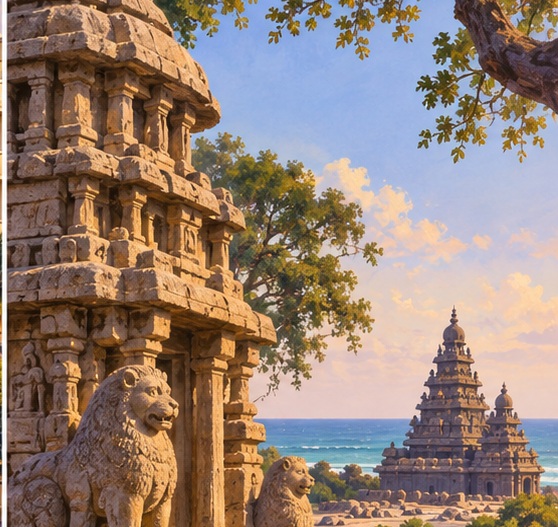
The Shore Temple gives the outing a coastal setting and a contrast with the rock-cut and monolithic forms. Consider how the built temple and its surroundings work together. The view of the sea is part of the visit, but the monument is more than a scenic background. Give its shapes and the weathered surfaces attention of their own.
Keep the plan within permitted areas and follow the site's restrictions. A temple beside the coast is not an invitation to climb sea-facing walls or improvise a swim afterwards. Choose a shaded break and a meal between visits. Heat and sun can make a smaller route more rewarding than a determination to see everything.
Let the return be part of the plan
Agree on your transport destination, waiting arrangements and the return before the outing begins. A quoted ride price is not always the same as a full day of waiting and multiple stops. Keep the terms clear and allow room for traffic rather than planning the last monument visit right against a departure or evening appointment in Chennai.
Check current entry arrangements for the sites you choose, including what any combined ticket covers. Keep receipts and confirm the merchant name before paying for food or shopping. A day with a few monuments, a good explanation and time beside the sea can be complete without a hurried list of extra stops on the way back.
Find out more about ZikPe
Explore ZikPe on its official website. Check the current product information and terms there before choosing a payment service for your trip.
Explore the ZikPe app ↗