The day starts with a choice
A day beyond Pune can be about open hillside and fort history, or about looking closely at rock-cut Buddhist spaces. Sinhagad suits the first idea. Karla and Bhaja, near Lonavala, suit the second. They do not belong in the same rushed itinerary merely because both can be reached from Pune.
Think about the people travelling with you. A steep or uneven approach changes the outing for someone with limited mobility, a child or a traveller who expected an easy drive. Choose the actual visit, including the walk from the arrival point, rather than selecting only a destination photograph.
Sinhagad: let the hill set the pace
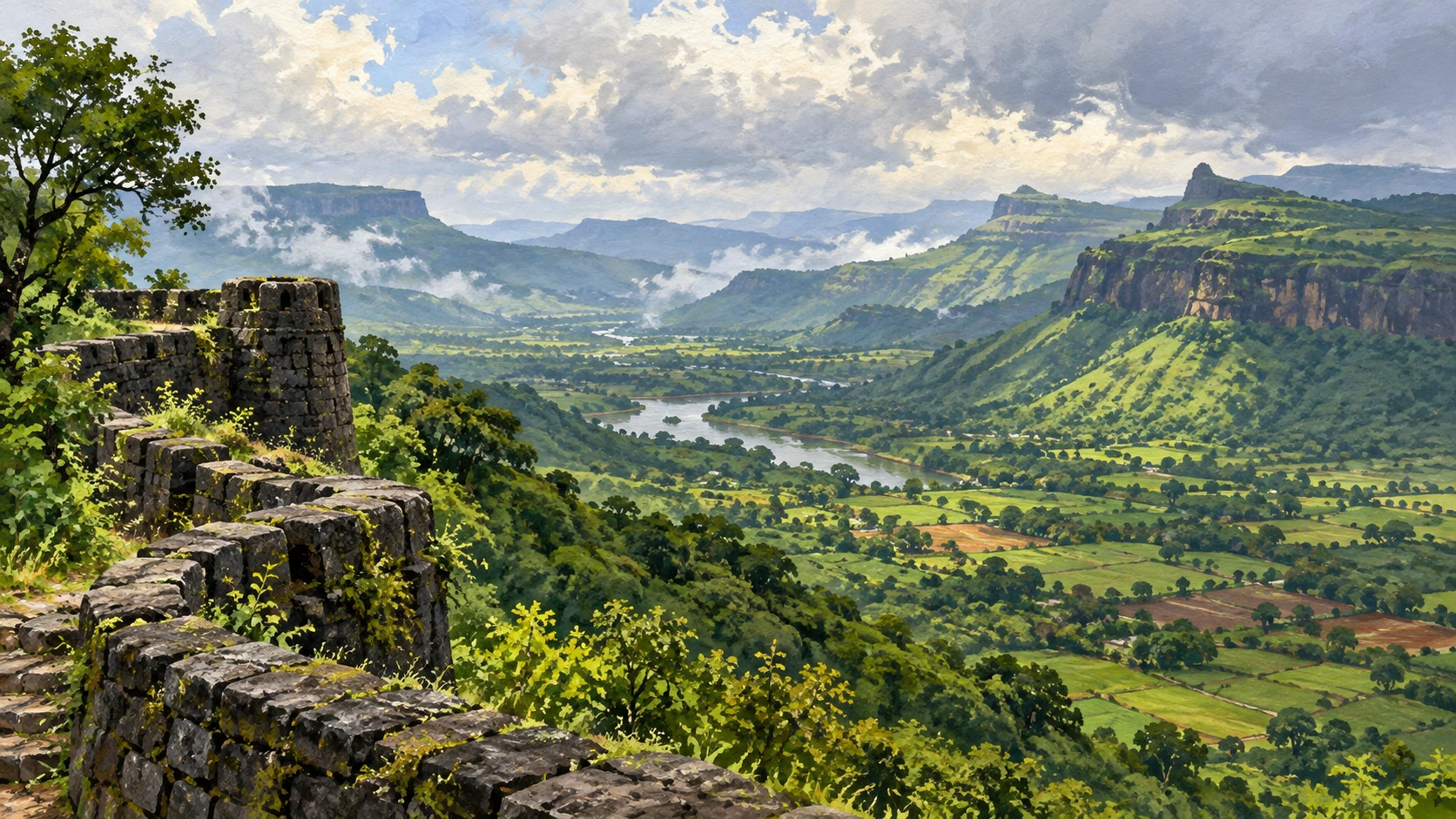
Sinhagad sits southwest of Pune in the Sahyadri landscape. The fort is associated with the 1670 battle and the memory of Tanaji Malusare. Its attraction is the combination of history and the broad hill setting, not a promise of a perfectly preserved palace to tour indoors.
Decide whether you are planning a trek or a vehicle-assisted visit, and check the current approach arrangements. Road access, the point where vehicles stop and any restrictions can change the amount of walking. Keep the return in mind from the beginning and avoid turning an afternoon arrival into an unplanned descent in fading light.
Karla and Bhaja: a different kind of attention
Karla and Bhaja are rock-cut Buddhist cave sites in the Lonavala area. Their carved spaces ask for time at a smaller scale: the shape of a hall, the treatment of stone and the relationship between a cave and the hillside outside it. This is not the same experience as arriving at a fort viewpoint.
Choose one cave site as the main visit. Add the other only if the approach, transport and opening arrangements leave a comfortable margin. A pin on a map does not include the steps or uphill walk. Check the current visitor route and entry conditions before deciding that both will be simple for everyone in your group.
Rain changes the plan
The Sahyadris can look inviting in rain, but wet rock, poor visibility and a difficult road are practical facts, not part of a romantic promise. Do not follow an unofficial shortcut, lean over an edge for a photograph or continue upward when weather or the people responsible for the site advise against it.
Use footwear with grip, keep water accessible and protect essentials without packing an unnecessarily heavy bag. Avoid treating seasonal cascades or streams as safe bathing spots. If conditions are poor, shortening the visit or returning to Pune is a sound decision, not a failed day trip.
Return with a margin
Arrange a return vehicle or confirm the transport connection before leaving the city. Keep lunch and a rest in the plan rather than using every spare minute for another attraction. A cave visit that runs longer than expected should not create pressure to speed through a fort afterward.
Check the official site notices close to departure, including access, tickets and any temporary closure. A good day from Pune gives one landscape or historic place enough room to make an impression. It should end with an ordinary journey back, not a last-minute problem you created by adding one more stop.
For a weekend, choose one base rather than seven stops
The Sinhagad and cave-site choices above suit a day with one clear focus. A full weekend opens other possibilities: Lonavala for a hill-town base, Panchgani for plateau landscapes, Bhimashankar for a pilgrimage-and-forest setting, or Panshet for reservoir scenery. They are alternatives, not additions to the same two-day route.
Choose the outing by what you want to do and by the people travelling. A traveller who wants a short scenic walk should not inherit a demanding fort trek because both appear under nature in a search. Check the present journey from your part of Pune and decide whether an overnight stay makes the return less tiring. No fixed travel time is promised here.
Lonavala: hill-town time or a cave visit
Maharashtra Tourism describes Lonavala through its Sahyadri setting, nearby forts and hill scenery. For an easier weekend, make the town a base and choose one permitted viewpoint or the Karla-and-Bhaja direction already discussed. For a trek, identify the specific route and current access separately; the destination's general popularity does not establish a trail's safety.
Do not turn the tourism page's description of waterfalls or Bhushi Dam into permission to enter flowing water. Check restrictions and weather, use only permitted areas and keep an indoor or shorter alternative. Accommodation, transport and a meal can be enough structure without filling both days with every fort in the vicinity.
Panchgani: choose the plateau setting, then check the visit
Panchgani offers another hill-station option. Its official tourism account includes Table Land and viewpoints among the features of the area. That suits a weekend organised around landscape and slower town time rather than a plan to run between as many attractions as possible.
Check the actual visitor route and the walking surface for the places you choose. Exposed ground, wind, rain and visibility matter more than a seasonal label. Confirm room arrangements and the return drive before setting out, especially when different people in the group have different expectations of how much walking the weekend will involve.
Bhimashankar: pilgrimage and forest access are different plans
Bhimashankar combines the temple destination with a wildlife-sanctuary setting in the Sahyadris. Decide whether worship is the purpose, or whether you want a permitted nature visit. A temple visit does not establish permission for every forest trail, and a forest outing should not rely on following a route posted by an unknown walker.
Confirm current access with the responsible local authority and ask about any guide or entry requirement for the activity you want. Respect the temple's visitor rules and keep wildlife observation patient and distant. Do not expect a guaranteed sighting or use a pilgrimage timetable to promise an easy same-day nature excursion for everyone.
Panshet: scenery first, a water activity only after checking it
Maharashtra Tourism lists Panshet as a reservoir destination outside Pune. That can support a different kind of outdoor day from a fort or cave visit. Pick a permitted viewing or visitor area, arrange a meal and keep the journey back straightforward. Reservoir scenery is a reason to visit, not evidence that an unmarked shoreline is public or safe.
If an activity is part of the plan, confirm the current operator, permissions, safety equipment, age limits, weather decision and cancellation terms. A tourism page's list of boating or kayaking possibilities does not verify an operator you meet at the water. Swimming, camping and access to dam infrastructure each need their own clear permission; do not infer them from the word picnic.
Keep the two days flexible
A useful shortlist gives different kinds of trip: Sinhagad for fort history, Karla or Bhaja for rock-cut spaces, Lonavala for a hill-town base, Panchgani for a plateau setting, Bhimashankar for a carefully scoped pilgrimage or forest visit, and Panshet for permitted reservoir scenery. The choices do not need a numerical ranking to be useful.
Book a stay only after checking its real location, room terms and route to the visit you want. Recheck site notices and weather close to departure. If conditions make the main outing unsuitable, shorten it or spend more time in the base town. A weekend with one good landscape or historic visit is better than a tight itinerary that depends on every road and activity going exactly to plan.
Find out more about ZikPe
Explore ZikPe on its official website. Check the current product information and terms there before choosing a payment service for your trip.
Explore the ZikPe app ↗