
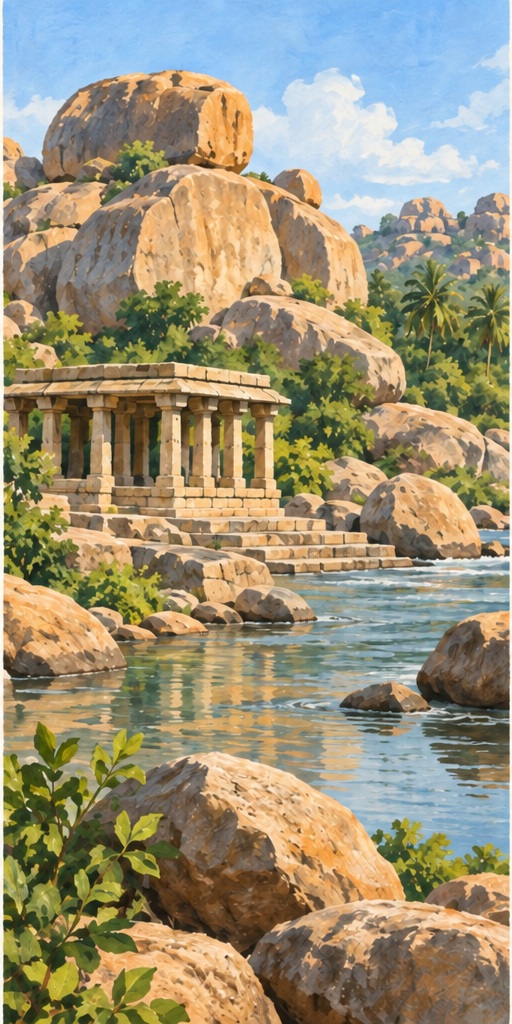
Let the landscape organise the trip
Hampi's monuments sit among granite boulders, hills and the Tungabhadra River. The setting is part of the former Vijayanagara capital, not an empty background around a few temples. Its remains include sacred and royal complexes, markets, water structures and gateways. Three days offer space to compare those different parts without pretending the whole city fits into one walk.
Use this as a sequence of interests rather than a timetable with promised travel times. Where you stay, the weather and the visitor areas currently open will shape the route. Confirm transport between clusters and leave a break in the middle of each day. A short outing with attention is more useful than a long afternoon spent travelling between places you barely enter.
Day one: a sacred centre that is still alive
Start with the Virupaksha Temple area and the surrounding streetscape. Virupaksha remains a place of worship, so approach it as a living temple rather than an abandoned monument. Follow the current rules for entry, dress and photography, and avoid obstructing worshippers while looking at the architecture.
The bazaar setting helps connect a major religious building with the city around it. Look at the relationship between open space, routes and built forms rather than searching only for a perfect isolated photograph. Choose a nearby continuation if the day allows it, but keep the first outing small enough to settle into the landscape.
Day two: the royal city and its practical systems
Give the royal area a separate outing. Hampi's surviving spaces include ceremonial structures and parts of the city's infrastructure, so the visit can move beyond a succession of temple facades. Ask how water, movement and access worked within the capital. A good explanation can turn an apparently empty enclosure into a place with a readable purpose.
The Lotus Mahal and the Elephant Stables are useful contrasts in form, but do not assume a picturesque name explains everything about a building's use. Separate what survives from what a guide reconstructs through evidence. Keep enough time to see the shapes and spacing of the structures, not just the detail that makes them familiar from photographs.
Day three: Vittala and another view of the river
Reserve a further outing for the Vijaya Vittala Temple complex, known for its stone chariot and pillared architecture. Look at the chariot as part of the temple setting rather than the only object worth visiting. The relationship between pavilions, courtyards and sculptural details gives the complex its scale.
Treat carved columns and monuments as things to preserve, not objects to strike, climb or test for a sound. Follow barriers and staff instructions. If you add a riverside pause, stay within safe permitted areas and do not assume a river crossing or boat service is operating. Water, weather and access can change the practical shape of an afternoon.
A plan that bends without falling apart
Choose dates with the heat and rain in mind, and check current local conditions before travelling. Even in a comfortable season, open stone landscapes can mean considerable sun exposure. Bring water, use shaded breaks and agree on pickup arrangements before walking away from your transport.
Keep meals close to the part of Hampi you are visiting, and confirm opening times directly when a particular place matters. Avoid making an unverified cafe or hotel the hinge of the itinerary. Check the current entry categories and what a ticket covers. Three days can be complete with a few well-understood clusters and room to return to the view you liked most.
Find out more about ZikPe
Explore ZikPe on its official website. Check the current product information and terms there before choosing a payment service for your trip.
Explore the ZikPe app ↗