
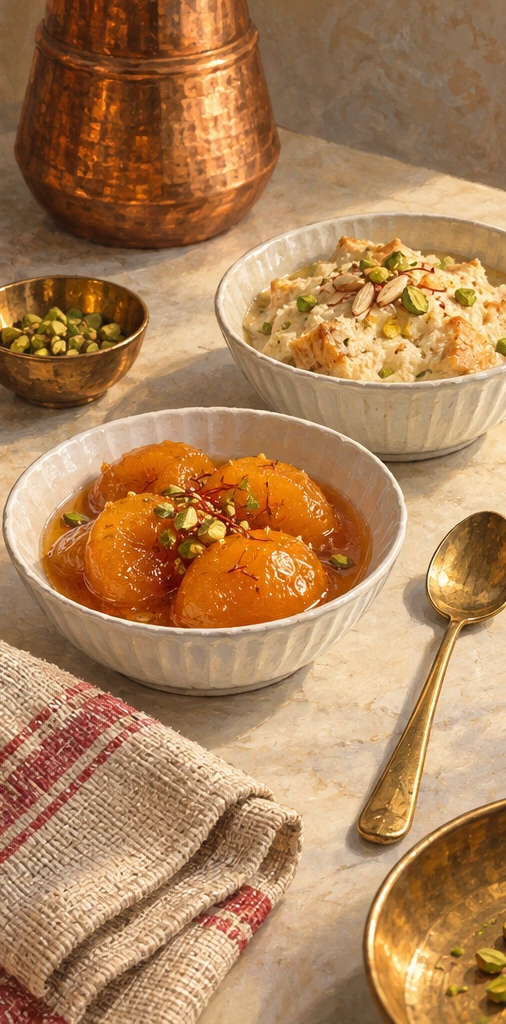
Make dessert a choice
A Hyderabad meal can end with something more specific than a generic sweet plate. Qubani ka meetha and double ka meetha are two useful starting points, but they are not interchangeable and you do not need both after a large biryani. Choose one according to the texture and richness you want.
If dessert matters to the visit, ask about it before placing the main order. Kitchens may not offer every sweet every day, and a name on an old menu is not proof of availability. Keep the portion in mind so the ending remains enjoyable rather than becoming an obligation.
Qubani ka meetha: the apricot at the centre
Qubani ka meetha is made with dried apricots cooked into a sweet preparation. The fruit remains the main character even when a kitchen adds cream, custard or ice cream. Ask which finish is included so you know whether you are ordering the fruit preparation alone or a richer combination.
The result can be softer or more textured according to the kitchen. It is worth taking a small spoonful without treating one preferred consistency as the only legitimate form. A well-known dish has room for variation, and a travel visit is not a reason to announce a verdict on the entire city's cooking.
Double ka meetha: a bread-based contrast
Double ka meetha is a bread-based Hyderabadi dessert, commonly involving a sweet syrup, dairy and nuts. It offers a different texture and weight from the apricot preparation. If you like a rich bread sweet, it may be the more natural choice; if you want fruit at the centre, begin with qubani.
Ask whether it is served warm or cool and what the kitchen adds. Do not assume it is identical to shahi tukra simply because both involve bread and sweetness. The useful question is how this kitchen makes the dish, not which name you recognise from somewhere else.
Ingredients matter more than a royal story
Apricots do not make a finished dessert dairy-free, and bread does not make it free of egg or other ingredients. Cream, ghee, milk, nuts and garnishes may be involved. Tell the server exactly what you must avoid and ask about the particular preparation and handling.
Traditional dessert stories often mix documented history with speculation about royal kitchens. You do not need to accept a dramatic origin tale to enjoy the plate. Let the ingredients and the experience of eating it carry the visit, and keep claims about invention or the oldest recipe out of the conversation unless they are well established.
Share the ending if the meal was large
A shared portion can be enough for two people after a substantial main course. You can also make dessert a separate later stop, but verify the business and current service rather than assuming every bakery or biryani restaurant will offer the sweet you want.
For takeaway, ask about safe storage and how long the preparation can remain without refrigeration. That question belongs to the kitchen, not a generic travel promise. Enjoy the dessert where you can if the journey makes handling uncertain, and leave the meal with a clear memory of the flavour rather than a bag you do not know how to keep.
Find out more about ZikPe
Explore ZikPe on its official website. Check the current product information and terms there before choosing a payment service for your trip.
Explore the ZikPe app ↗