Eat the way the city does
Varanasi eats early and often. Mornings start with hot kachori and sabzi, the day moves on to chaat and lassi, and evenings often end with something sweet. A good plan is to pick one dish per time of day, rather than trying to eat everything at once.
Many of the best-known places are small and busy. Go with a little patience, a light stomach and a willingness to eat standing up.
Start with kachori and sabzi
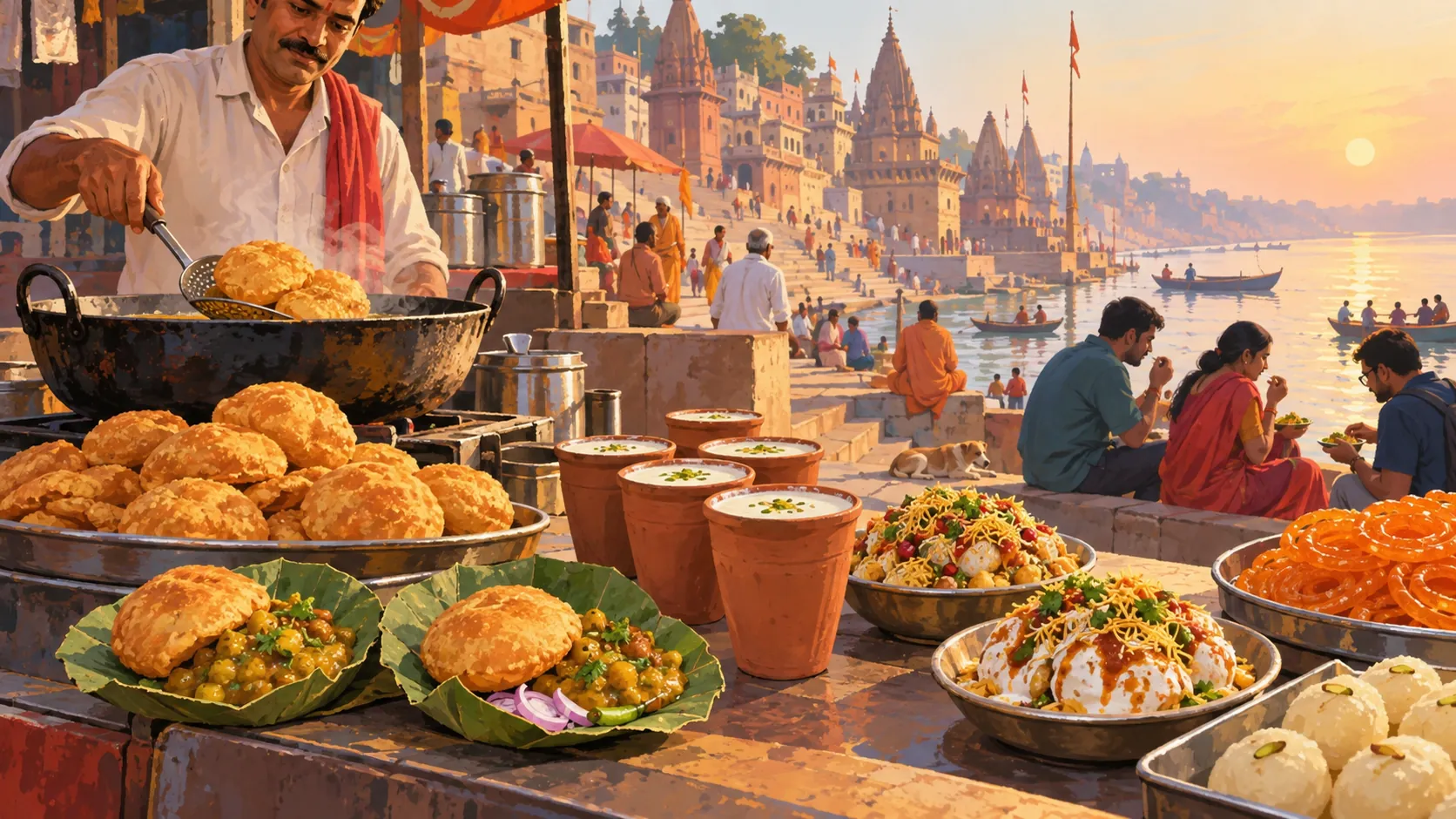
A common breakfast is a plate of crisp kachori with a spiced potato sabzi, often followed by jalebi. It is filling and cheap, and it is best eaten when it comes out of the pan. Look for a stall with a steady queue, since that usually means fresh food.
If you are sensitive to spice or oil, order a small portion first. Ask for the plate to be served hot and skip any food that has been sitting out for a long time.
Order a lassi, then rest
Varanasi's lassi is usually thick, served in a clay cup and sometimes topped with cream or a little rabri. It is a meal in itself, so do not pair it with a large lunch. The clay cup is meant to be discarded after use, so look for the bin rather than leaving it on the street.
If you prefer something lighter, ask for a thinner version or a plain glass of buttermilk. Choose a shop with clean cups and a busy counter.
Try the chaat
The city's chaat includes tamatar chaat, aloo tikki and golgappa, each with its own mix of spice, tang and crunch. Chaat is best in the afternoon when the stalls are busy, and the ingredients are fresh.
Watch how it is made, and choose a stall where the water and chutneys are covered. If you have a delicate stomach, stick to cooked items such as tikki rather than anything with raw water.
Finish with a sweet and a paan
Banarasi sweets, from malaiyo in winter to rabri and peda, are part of the local table. Banarasi paan is also a tradition, though it is an acquired taste. Try a sweet paan if you want something mild.
Keep a gap between meals. A walk by the river after eating is more pleasant than another stop, and a small bottle of water will help with the spice.
Eat safely without missing the point
Street food is part of the pleasure in Varanasi, but a few habits help. Eat where the turnover is high, choose food that is cooked in front of you and carry hand sanitiser. Drink bottled or filtered water and avoid ice if you are unsure about its source.
If you have a sensitive stomach, start with cooked dishes and add chaat and lassi gradually. Spice levels can be strong, so ask for less if you prefer.
Fit meals around the day
A simple rhythm works well: kachori after the dawn boat ride, a late-morning lassi, a quiet lunch and chaat in the afternoon. Save sweets for the evening walk. That way, you eat across the day, not in one heavy sitting.
Keep a bottle of water with you, and give yourself a break in the early afternoon. The streets are crowded and warm, and a short rest makes the evening more enjoyable.
A simple order for a first visit
If you only have one morning, start with kachori sabzi at a busy shop, then walk to a lassi stall and finish with a small plate of chaat. Share dishes if you are with others, so you can taste more without overeating.
Prices are usually modest, but ask before ordering extras. Carry small notes, since many stalls prefer cash or UPI, and check that the QR code works before you eat.
What to expect from the lanes
The old lanes are narrow, busy and loud. Cows, bikes and handcarts share the space, so walk on one side and keep your bag in front. Shops open at different times, and some close in the afternoon.
Go with a local guide or a hotel suggestion for your first visit. Ask what is cooked fresh that day, and trust the shops with a steady queue.
Find out more about ZikPe
Explore ZikPe on its official website. Check the current product information and terms there before choosing a payment service for your trip.
Explore the ZikPe app ↗