Start with two different histories
Lucknow's heritage is easier to understand when you separate its monumental religious spaces from the Residency's history of conflict. The Bara Imambara area and the Rumi Darwaza offer one connected outing; the Residency deserves another period of attention. They are not interchangeable stops simply because each is historic.
A first visit can use those two chapters as its centre, with meals and a little shopping around them. This is not a ranking of every place in Lucknow. It is a smaller route that leaves room to notice architecture, understand what you are seeing and make a practical return to your accommodation.
Bara Imambara: look at the hall before the maze
Bara Imambara was built under Nawab Asaf-ud-Daula in 1784. Its large vaulted central hall is a reason to visit in its own right. Give the space time before turning your attention to the Bhool Bhulaiya above it. The architecture becomes easier to appreciate when you look at scale and shape, rather than treating the whole visit as a puzzle to solve.
The imambara is a living religious place associated with Shia observance. Follow current dress, photography and access rules, and leave room for worshippers. Use an authorised guide for the Bhool Bhulaiya and confirm which areas are included in your visit. Do not enter a closed passage because another visitor suggests it leads to a better view.
Rumi Darwaza: read a gateway within the city
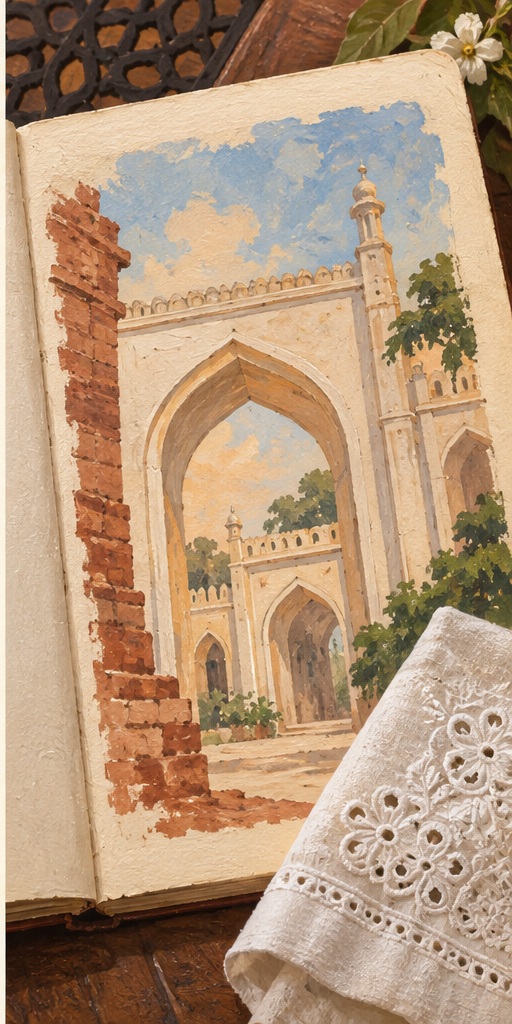
Rumi Darwaza belongs to the surrounding cityscape, not a sealed exhibition room. Look at the large central arch and the decorative work from a safe public position. The relationship between the gateway, the road and nearby buildings is part of its character. Do not stand in traffic to reproduce a photograph you have seen online.
Chhota Imambara can extend this outing if access and your pace allow it. Check its current arrangements separately rather than assuming one entry covers everything nearby. A guide can help connect the monuments without inventing an explanation for every ornament. Two places understood well may be enough for the morning.
Give the Residency its own time
The Residency complex suffered severe damage during the events of 1857. Its ruined buildings and grounds offer a different experience from the imambara's hall and decoration. Read the explanations and look at the surviving structures as evidence of a changed place, rather than imagining a fully preserved colonial residence.
The complex includes the 1857 Memorial Museum, managed by the Archaeological Survey of India. Check whether the museum is open on your chosen day and allow room to spend time with the exhibits. The grounds and the museum can support one another: one shows physical remains, while the other helps explain events. Neither needs to be hurried into a short stop before lunch.
Let food and craft belong to the day
Lucknow's food and embroidery are part of a wider visit, but a heritage itinerary need not become an unverified list of famous shops. If you explore chikan embroidery, compare the stitch work and ask whether it is hand-worked or machine-made. Check the fabric, finish and price before choosing something to take home.
For a meal, ask about ingredients and preparation rather than assuming every kebab or biryani suits your diet. A place close to your route can protect time for the afternoon. Confirm the amount and merchant name when paying, and agree on a clear pickup point if taking a ride. Leave with one or two stories you can explain, not only a long list of places where you paused for a photograph.
Find out more about ZikPe
Explore ZikPe on its official website. Check the current product information and terms there before choosing a payment service for your trip.
Explore the ZikPe app ↗