Look beyond a colour you like
A textile can carry a memory of Bengal without being treated as a souvenir you will never use. Start with the person and purpose: a saree for an occasion, a lighter cloth for frequent wear or a smaller textile for someone who does not wear sarees. The right material matters more than buying the most elaborate piece in the shop.
Kolkata is a useful place to encounter the region's handloom traditions, but a city of purchase is not the same as a place of weaving. Ask where a specific piece was made and what the seller can document. Avoid turning a convincing story at the counter into your own claim of provenance.
Baluchari for a close look at the border
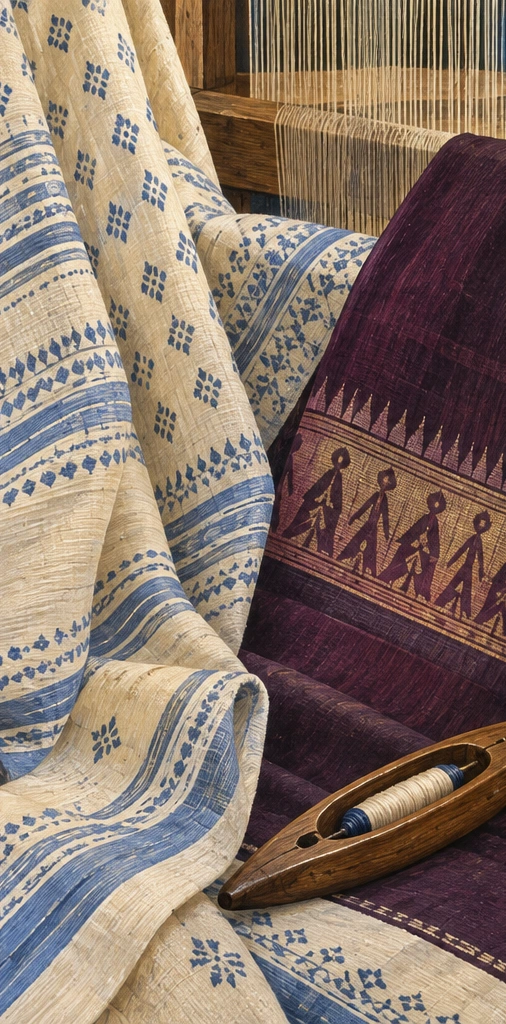
Baluchari is associated with figurative woven decoration, particularly in the pallu and borders. The pictorial tradition is closely associated with weaving around Bishnupur. It is a good choice to examine slowly, looking at how a scene sits within the weave rather than only at the cloth from across a counter.
Ask what fibre the piece contains. Retail catalogues use Baluchari for different products, so the name alone should not replace the label. Check the weight and how it falls, especially if it is intended as a gift. An impressive pallu does not answer whether the recipient will find the saree comfortable.
Jamdani and the everyday choices
Jamdani offers a different reason to look closely: patterned motifs integrated into the cloth. Do not assume every product carrying the name has an identical fibre, weight or method. Ask the seller to explain the particular piece and distinguish weaving from a printed imitation of a woven pattern.
Tantuja's catalogue includes Jamdani, Tangail, Begampuri and Dhanekhali categories alongside silk and other textiles. These give you a vocabulary for browsing, not a promise that every category will be available at a given counter. If daily wear is the aim, tell the seller that directly instead of being steered toward an occasion purchase.
Choose a place to compare
Tantuja, a Government of West Bengal enterprise, and Biswa Bangla are two useful starting points for a structured search. Biswa Bangla's catalogue includes Baluchari silk and other regional products. Use the catalogues to identify the sort of piece you want, then verify the outlet, stock and opening hours before making a special journey.
Do not treat a state-linked name as proof of every claim about an individual textile. For an expensive purchase, ask for the composition, origin and any claimed certification on the bill. If the answer is uncertain, keep it uncertain; you can still like a cloth without giving it an unsupported history.
The bill and the care are part of the cloth
Look for snags, uneven finishing or marks before packing. Ask about washing, storage, colour transfer and ironing, and check whether a blouse piece or any finishing is included. Agree additional work and its delivery time separately. Photograph the product details for yourself if the shop permits it.
A gift becomes easier to use when its care instructions travel with it. Ask for packing that suits the journey and confirm exchange terms before paying, especially if alterations are involved. Leave with fewer pieces if necessary, but leave knowing what they are. That knowledge is more useful than a bag full of names.
Find out more about ZikPe
Explore ZikPe on its official website. Check the current product information and terms there before choosing a payment service for your trip.
Explore the ZikPe app ↗