
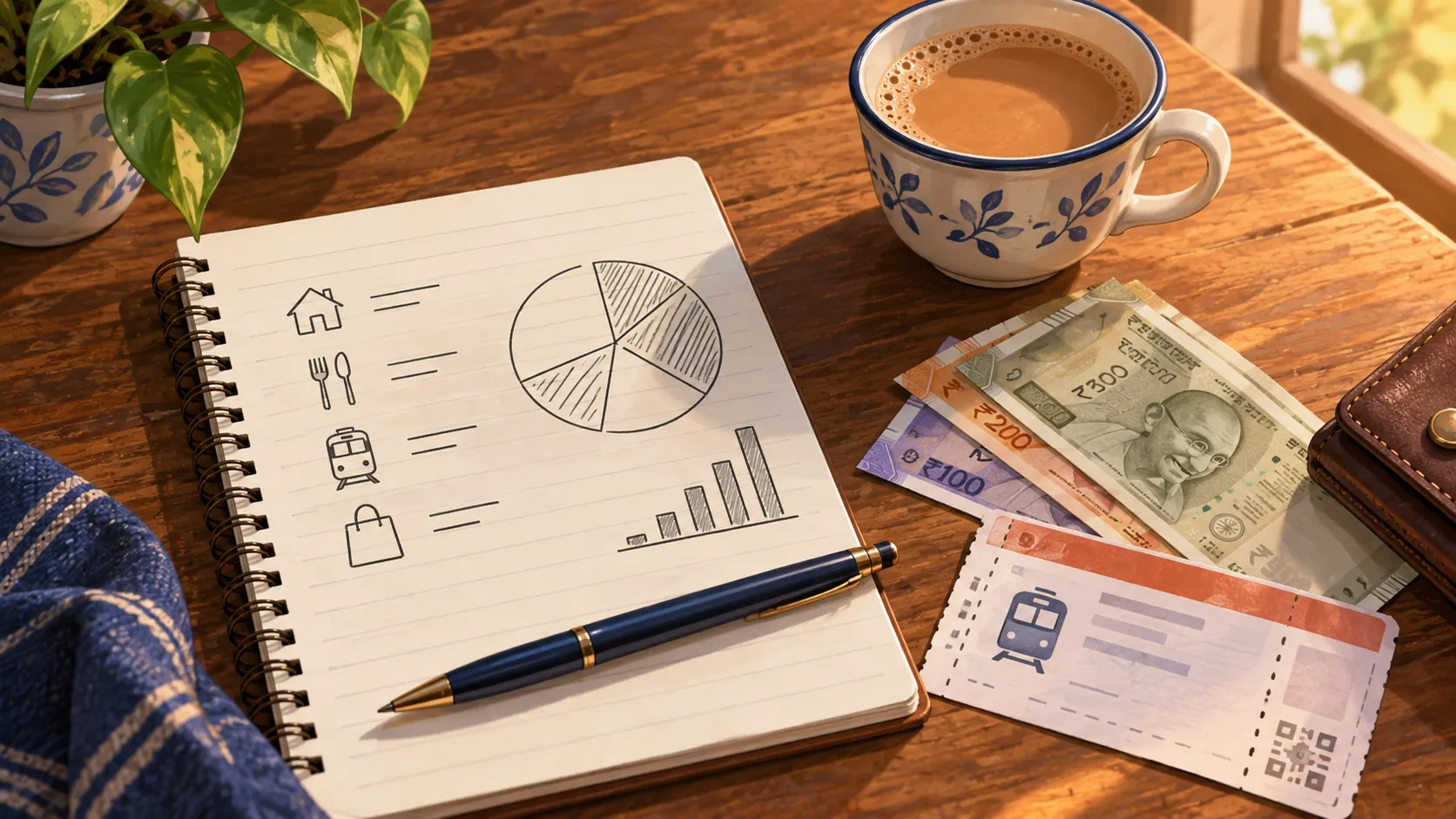
Start with the shape of the trip
Before you set a number, decide how long you will stay, where you will go and what kind of trip you want. A slow trip with few moves costs less than a fast one with many flights. Think about how much comfort you want, not just how little you can spend.
Prices change by season and city, so check current costs when you plan.
Group your costs
A simple budget has five groups: getting there and around, places to stay, food, things to do and a buffer. Decide how much each group matters to you, and give it a share of your total.
Writing this down in a notebook or a spreadsheet is enough. The aim is to see where your money will go.
Transport
Long train and flight tickets are often the biggest line. Book early for trains in busy months, and compare options for each leg. Local rides are cheap but add up, so set aside a daily amount.
Check current prices on official sites or trusted booking platforms.
Stays
Rates differ widely between hostels, homestays and heritage hotels. Check what is included, such as breakfast, taxes and transfers. Read recent reviews before you commit.
Mixing stays can keep costs in check. A special night at a heritage hotel can balance cheaper nights elsewhere.
Food and daily spending
Food in India can be inexpensive or costly depending on where you eat. A mix of local meals and a few special dinners works well. Carry small notes for snacks and tips.
Keep an eye on bottled water and drinks, since they can quietly add up.
Add a buffer
Set aside part of your budget for surprises: a delay, an extra night, a gift you did not plan. A buffer of some size gives you room without stress.
If you do not use it, enjoy a final meal or put it toward the next trip.
Check in as you go
Look at your spending every few days. If you are over in one group, trim another. A budget is a guide, not a rule.
The best budget is one you will actually follow.
Example of splitting a budget
Try dividing your total into rough shares, for example a larger share for stays and transport, a middle share for food and things to do, and a smaller share for the buffer. The exact split is yours, so adjust it to what matters to you.
A traveller who loves food might raise that share. Someone who wants a special stay might raise another.
Track in a simple way
A note on your phone with the day, the item and the amount is plenty. Check it each evening. Photos of receipts help if you need to look back later.
Do not worry about being exact to the last rupee.
Ways to save without losing the trip
Travel in shoulder seasons, use trains for medium distances and eat where locals do. Walk when you can. Book popular tickets early.
Skip what you do not care about and spend where it counts.
A ZikPe note
Check ZikPe's official product information, eligibility and current terms before relying on it for a trip. Keep another payment method available and confirm that the merchant accepts the method you intend to use.
Find out more about ZikPe
Explore ZikPe on its official website. Check the current product information and terms there before choosing a payment service for your trip.
Explore the ZikPe app ↗