
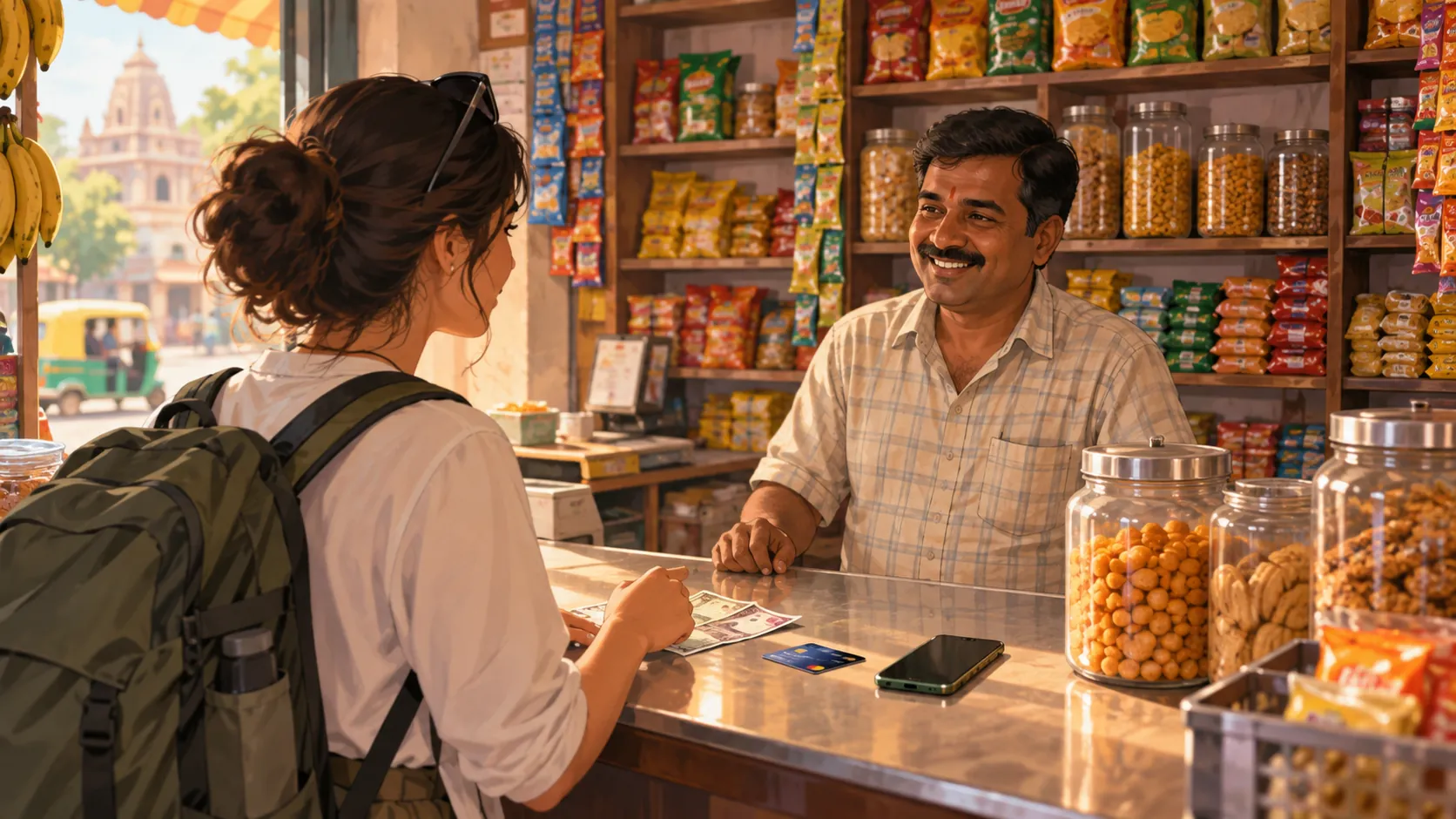
Expect a mix
In big cities, hotels, large restaurants and malls take cards. Small shops, street stalls, rickshaws and local markets often prefer cash or UPI. A good plan carries a card, some cash and a backup.
Check payment options with your hotel when you arrive, and ask which places nearby take cards.
Cards
Foreign Visa and Mastercard cards work at many hotels and larger shops, but not everywhere. Tell your bank you are travelling, and ask about foreign transaction fees before you go. Keep a second card in a different bag in case one stops working.
Shops sometimes ask whether you want to pay in your home currency or in rupees. Choosing rupees is usually cheaper, but check the screen before you confirm.
Cash
Cash helps for small purchases, tips, temple donations and rides. Keep small notes, since vendors may not have change for large ones. Carry only what you need for the day and keep the rest in your hotel safe.
Count your change, and keep a few ten and twenty rupee notes handy. Torn or very old notes may be refused.
ATMs
Bank ATMs are common in cities. Foreign cards generally work at most, but limits and fees vary by bank and card. Use ATMs inside bank branches or hotels where possible, and cover the keypad when you enter your PIN.
If an ATM asks whether to convert the amount to your home currency, think carefully before you accept, since that option often costs more.
Digital options for visitors
UPI is widely used in India, but a normal UPI app needs an Indian bank account and mobile number. For inbound travellers, the National Payments Corporation of India offers a prepaid wallet called UPI One World, which does not need an Indian SIM or bank account.
Check the current eligibility and set-up steps with the official provider before you travel. Rules and availability can change.
Avoid common mistakes
Agree the price before a ride or a meal if there is no menu or meter. Check bills for added service charges. Keep receipts for large purchases.
Be wary of anyone who offers a very good exchange rate on the street. Use banks or authorised exchange counters.
Keep it simple
One card, a second backup card, a modest amount of cash and a plan to find an ATM is enough for most trips. Add a digital option if it suits you.
Staying flexible matters more than finding the perfect method.
Paying for common things
Auto-rickshaws and taxis often take cash, though app-based rides take in-app payment. Street food and tea are usually cash or QR. Hotels and restaurants in cities are likely to take cards. Entry tickets vary, so look for a sign at the counter.
A short list of what you expect to pay each day helps you decide how much cash to carry.
Exchanging money
Use banks, airport counters or authorised money changers, and keep the receipt. Compare rates and fees before you hand over money. Avoid anyone offering a street rate that sounds too good.
Count notes carefully and check that they are not torn. Keep exchanged notes in more than one place.
Tipping and small notes
Tips are appreciated in restaurants, for guides and for drivers, and amounts are up to you. Small notes make this easy. Ask your hotel what is usual in the city you are visiting.
Keep a small pouch of ten, twenty and fifty rupee notes for these moments.
A ZikPe note
Check ZikPe's official product information, eligibility and current terms before relying on it for a trip. Keep another payment method available and confirm that the merchant accepts the method you intend to use.
Find out more about ZikPe
Explore ZikPe on its official website. Check the current product information and terms there before choosing a payment service for your trip.
Explore the ZikPe app ↗