Why you see QR codes everywhere
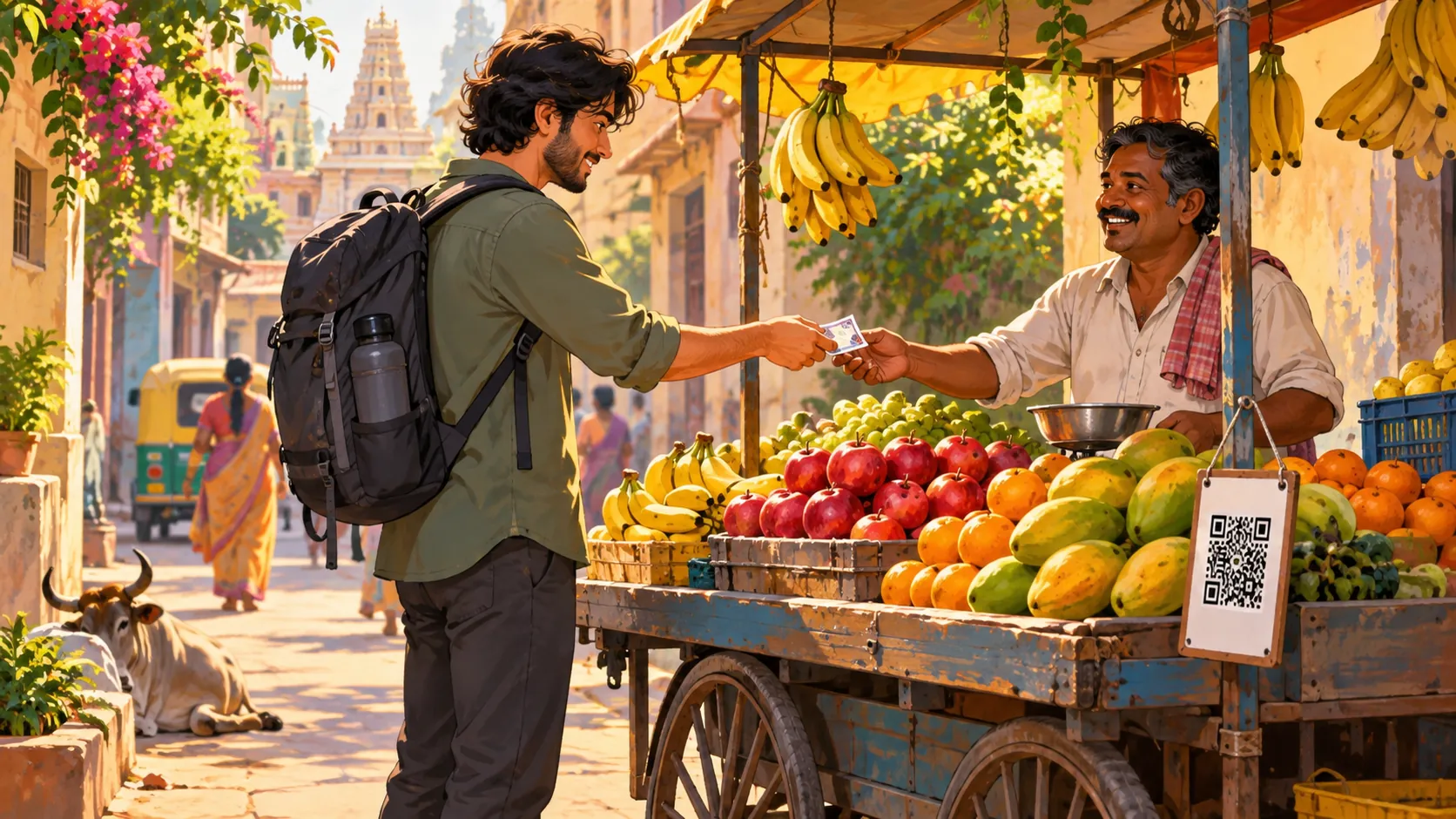
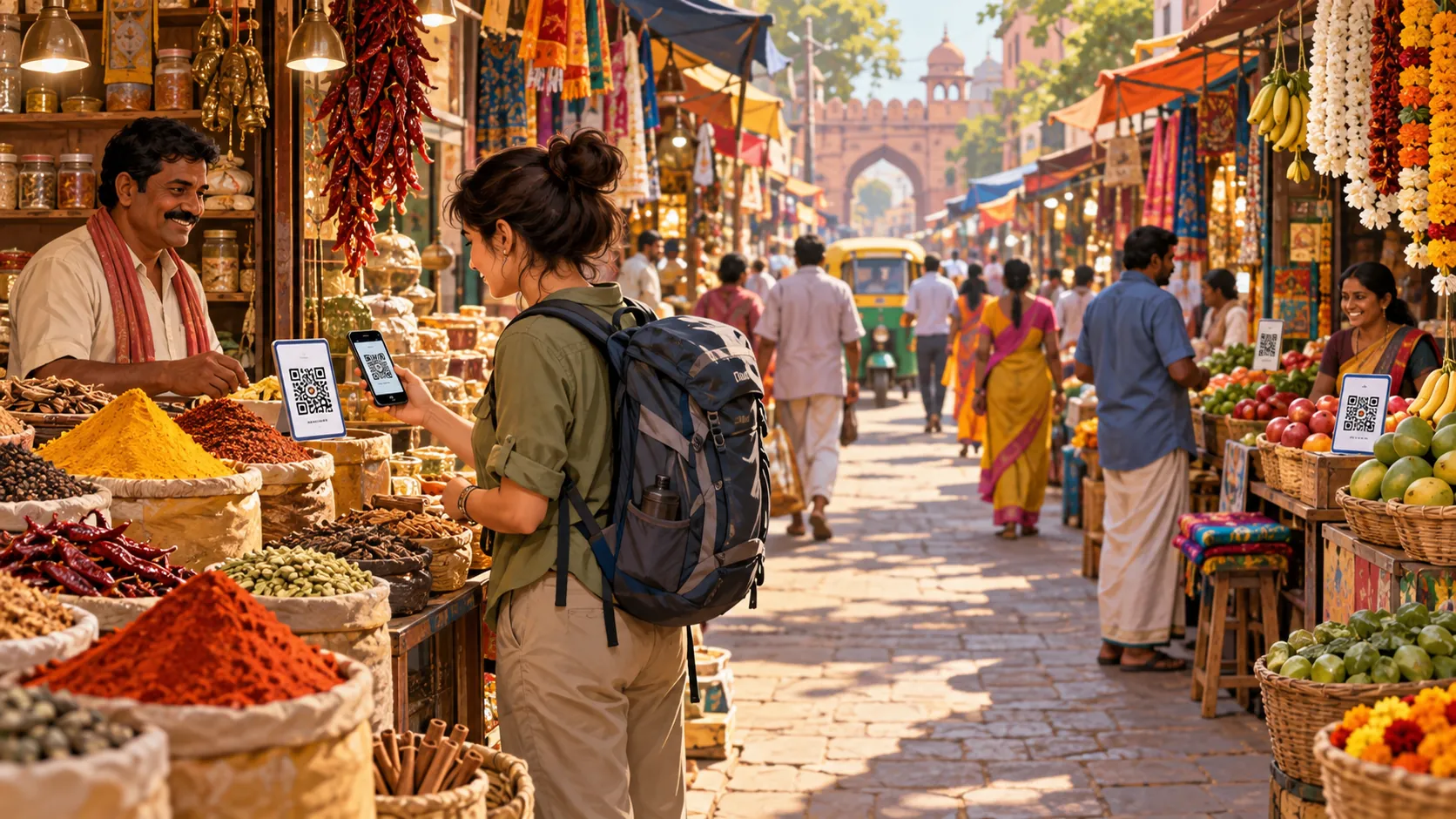
India's UPI system lets people pay by scanning a code in a phone app, and small merchants can accept it with just a printed QR code. That is why you see them at tea stalls, fruit carts, tiny shops and taxi stands, not just in malls.
For a visitor, it means a lot of small purchases can be paid without cash.
What makes it handy
There is no need to find change. The payment is quick, and you see the amount on screen. Small shops that do not have card machines can still take it. You also get a record of what you spent.
On a day of many small purchases, this is a real convenience.
The catch for visitors
A normal UPI app needs an Indian bank account and mobile number. The National Payments Corporation of India has described UPI One World as a prepaid wallet for inbound travellers that works without them. Eligibility and providers have changed, so check current terms.
Without such an option, you will rely on cash and cards.
Where QR falls short
Some stalls have no QR code, a network can drop, a phone can run out of battery and a few places simply prefer cash. Rural areas and some temples and local buses often take only notes.
Plan for these gaps with small notes and a charged phone.
Where cards do better
Hotels, larger restaurants and bigger shops take cards. For a big bill, a card gives you a receipt and some protection. For a hotel deposit, a card is usually the normal choice.
Use the tool that fits the amount.
Where cash does better
For tips, small rides, village markets and quick snacks, cash is simple. Keep small notes, since change can be hard to find.
A little cash makes you ready for the unexpected.
How to get the best of each
A simple mix works: QR for small shops, a card for hotels and restaurants and a little cash for everything else. Adjust it as you learn what each place expects.
After a few days you will know which tool to reach for.
Keep safe
Scan codes only at the counter. Check the name on the screen. Never share a PIN or one-time code. If a stranger sends you a code in a message, ignore it.
A calm routine keeps small risks small.
A sample day of mixed payments
A hotel breakfast goes on a card. A rickshaw ride is cash. A chai stall takes a QR scan. A museum ticket is bought at a counter. A lunch place takes a card, and an evening snack is another scan.
Nobody thinks twice about switching, and neither should you.
What to ask a shop
A simple question works: 'QR, card or cash?' Shopkeepers are used to it. If they take only one, they will tell you. If you cannot pay in that way, they often point to a nearby option.
Ask before you order if the bill is large.
Before you rely on it
Check the current terms of any wallet you plan to use, test it with a small purchase and keep a backup. Rules and providers change, so a quick check before your trip helps.
A backup turns a problem into a small detour.
A ZikPe note
Check ZikPe's official product information, eligibility and current terms before relying on it for a trip. Keep another payment method available and confirm that the merchant accepts the method you intend to use.
Find out more about ZikPe
Explore ZikPe on its official website. Check the current product information and terms there before choosing a payment service for your trip.
Explore the ZikPe app ↗