Begin with the city, not a list of facades
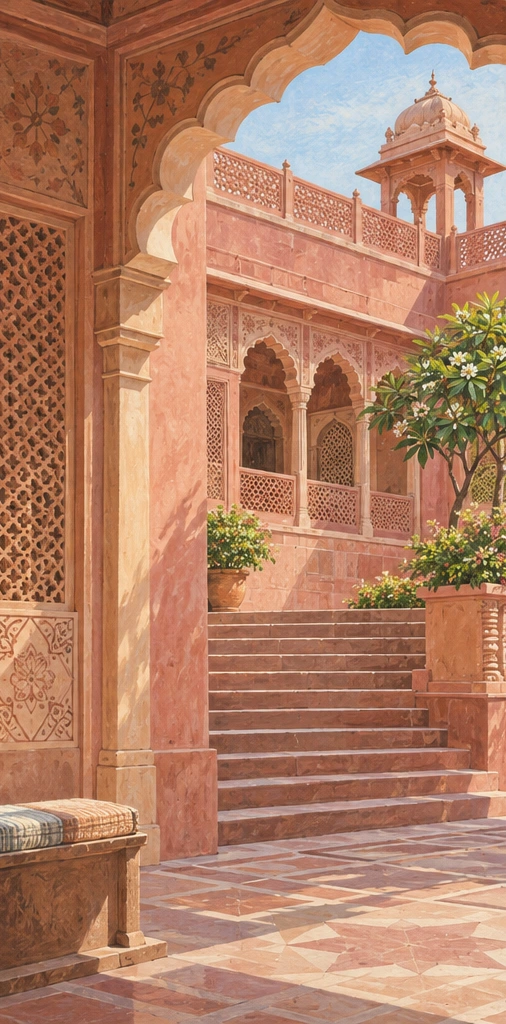
Jaipur’s architecture is easier to appreciate when you look at the old city as a planned place rather than a row of famous buildings. Its streets, market fronts and public spaces form part of the heritage. Begin with a manageable walk and notice how the buildings meet the street.
UNESCO’s account of the city highlights planning, craftsmanship and living traditions together. That combination matters to the visitor: the heritage is inhabited and used, not held still for sightseeing. Keep traffic, shoppers and working doorways in the picture when you choose where to stand.
Hawa Mahal: look at the screen, not only the photograph
Hawa Mahal’s facade provides a close look at the use of small openings and layered surfaces. Step back to read the whole form, then notice the repetition and the way light meets the screen. A familiar photograph should be the start of looking, not the end.
If you want to enter, check the current ticket and access arrangements rather than assuming a street view and an interior visit are the same experience. Do not stop in traffic or occupy a shop entrance to reproduce an angle. The building deserves attention without making other people carry the cost of your photograph.
City Palace: courts and collections are different layers
The City Palace combines an architectural setting with a museum visit. Give some attention to transitions between courtyards and enclosed spaces, then choose the collections that interest you. It is possible to enjoy the architecture without treating every room as an equally urgent stop.
Check which areas are included in the ticket you select. Standard entry does not establish access to every private or specially arranged part of the palace. A photograph from a premium experience is not proof that the same space belongs to an ordinary visit.
Amber: the hill changes the architecture
Amber places the palace experience in a different terrain from Jaipur’s planned old city. Approaches, terraces, gates and views become part of how you read the site. Leave enough time for the movement through the visitor route instead of arriving only for one courtyard.
Plan the approach and return according to the current permitted transport and walking arrangements. Heat, steps and uneven surfaces can shape the visit. Do not assume a distant view of a fort or wall makes it part of the accessible palace route.
Use comparison instead of a marathon
A useful first architecture day can be the old-city walk and City Palace, or a dedicated Amber visit with a shorter city stop afterward. Jantar Mantar is another distinct interest: an astronomical site whose instruments need their own attention, not an extra palace room.
Choose fewer sites and ask better questions about scale, material, light and use. Check hours, tickets and restrictions close to departure. Jaipur’s architecture is worth more than collecting entrances; it becomes clearer when you can explain why the street, screen and hill palace feel different.
Find out more about ZikPe
Explore ZikPe on its official website. Check the current product information and terms there before choosing a payment service for your trip.
Explore the ZikPe app ↗