
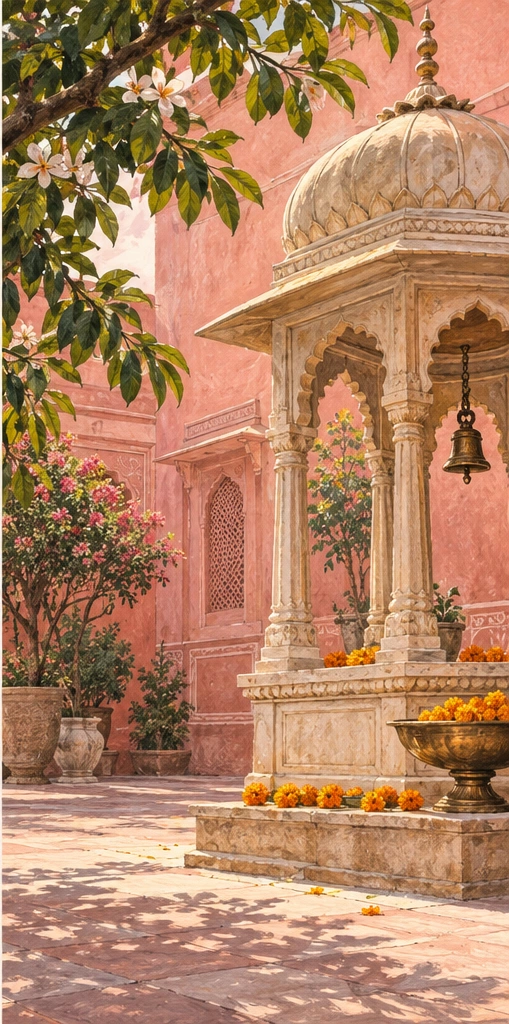
A temple visit is not a palace visit
Jaipur's temples should not be treated as a second list of monuments after the forts. Some visits revolve around the opening of a shrine for darshan. Others involve walking through a larger landscape. The first question is not how many you can collect, but how much time and attention you can give. Three useful starting points are Govind Dev Ji, Galtaji and Birla Mandir. They are different enough that there is little benefit in racing through all three. Choose one near the day's other plans, or give two a deliberate morning and evening with a break between them.
Govind Dev Ji: follow the worship schedule
Govind Dev Ji is a Krishna temple with a close connection to Jaipur's royal history. Sawai Jai Singh brought the deity from Vrindavan. The visit makes more sense when you allow the devotional setting to lead, rather than looking only for exterior ornament. Check the current darshan periods before leaving. A general opening span is not a promise that the shrine will be visible continuously. Festivals such as Janmashtami and Holi draw crowds and require a different level of planning. Stand where directed, keep passageways clear and leave the phone away when photography is not welcome.
Galtaji: a landscape as well as a shrine
Galtaji sits among low hills and includes temples, pavilions and sacred water tanks. The broader setting is part of the visit, so allow for walking and uneven ground rather than expecting a single roadside entrance. The journey should have a return arrangement, especially if you are going later in the day. Monkeys are associated with the complex, but they are wildlife, not an activity. Do not feed them, approach for a selfie or display food in your hands. Respect the sacred pools without assuming they are public swimming spaces. Follow instructions from the people responsible for the site, and turn back if a path or area is restricted.
Birla Mandir and a shorter city stop
Birla Mandir, also called the Lakshmi Narayan Temple, is a white-marble temple dedicated to Vishnu and Lakshmi. Its place in a Jaipur plan is different from Galtaji's hill setting. It can suit a shorter city visit if you want to focus on a single temple rather than a wider excursion. Moti Doongri's Ganesh temple is another option to research in this part of the city. Nearby does not mean the same rules or the same visiting schedule. Do not treat either as a substitute destination to be entered without checking access when the first is closed.
Choose comfort without losing courtesy
Wear clothing suited to worship spaces and shoes that are easy to remove. Ask about bags, photographs and any area where entry is limited. There is no universal temple rule that a travel article can promise for every visitor, and an attendant's current instructions matter more than a saved itinerary. For foreigners, NRIs and Indians alike, the thoughtful visit is the same: move with the place rather than trying to direct it. Leave time for the journey, resist the urge to photograph every moment, and let a temple be a visit with its own beginning and end.
Moti Dungri Ganesh: distinguish temple and private palace
Rajasthan Tourism describes the Ganesh temple at the foot of Moti Dungri and separately discusses the palace on the hill. Visiting the temple does not establish access to that private palace. Choose the worship visit, follow queues and ask about the current schedule. Its proximity to Birla Mandir can make them part of the same side of the city, but they are separate places with separate arrangements.
Jagat Shiromani: an Amer architectural visit
The Archaeological Survey of India's Jaipur Circle describes Jagat Shiromani through its carved marble entrance arch, Garuda pavilion and Radha-Krishna temple. It is in Amer, not an old-city stop to squeeze into a central Jaipur walk. Give the approach and carved detail time. Read the current access arrangements and respect any division between monument viewing and worship.
Shila Devi: attach the shrine to the Amer plan
Rajasthan's Devasthan directory identifies Shila Devi at Amer Fort, giving a specific religious stop rather than a vague palace-temple label. Confirm its own worship and access times as well as the fort's current ticket arrangements. A palace visit does not automatically answer whether the shrine is open to visitors at that hour. Choose it as part of a considered Amer outing rather than promising every temple in Jaipur in one morning.
Find out more about ZikPe
Explore ZikPe on its official website. Check the current product information and terms there before choosing a payment service for your trip.
Explore the ZikPe app ↗Sources and checks
Independently researched and updated 26 October 2026. Current access, weather, prices and opening arrangements must be checked before travel.