What Khajuraho is
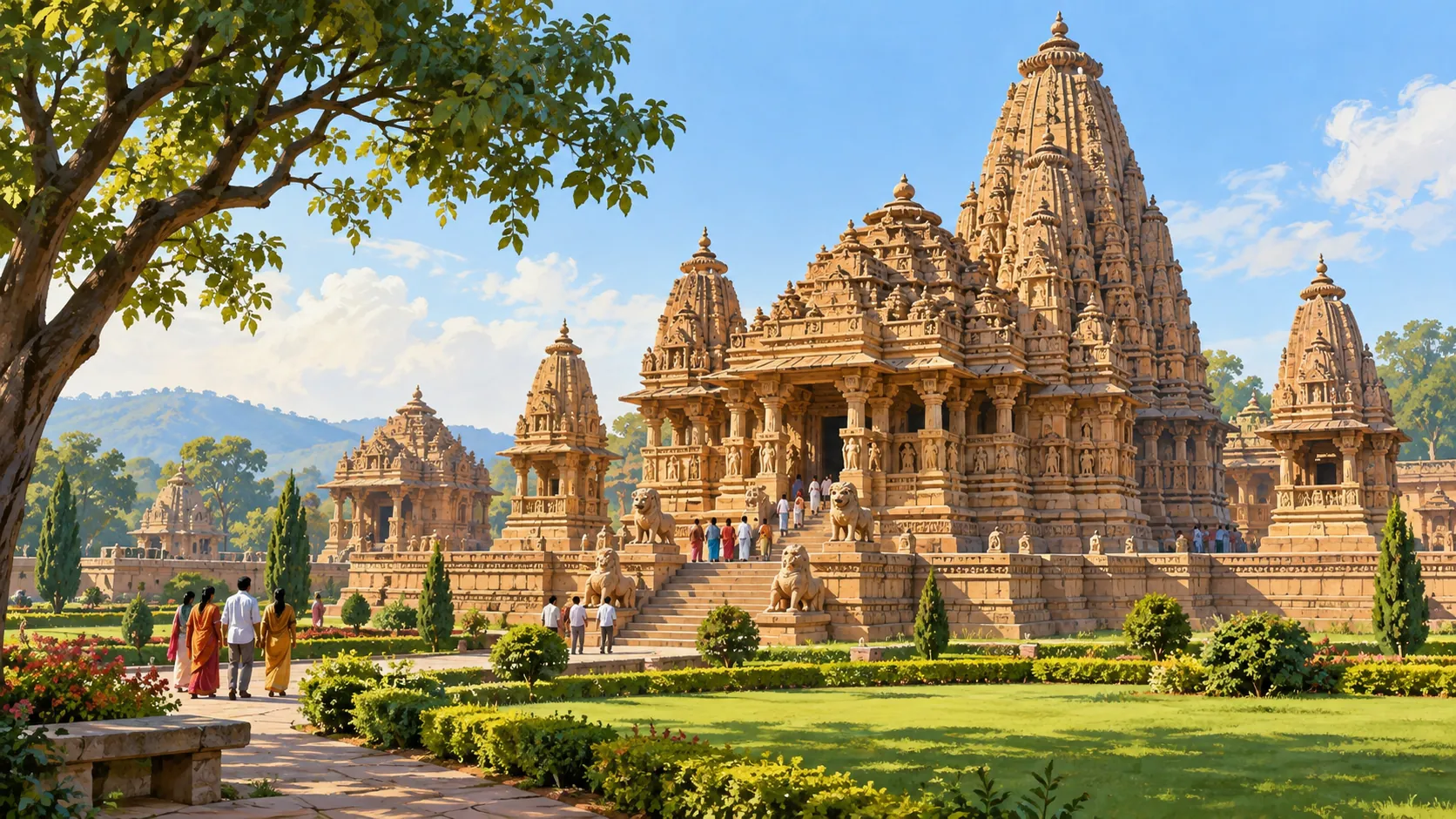
Khajuraho's temples were built over a thousand years ago and are a World Heritage property. They are known for their carved sandstone surfaces, which show gods, musicians, dancers and everyday scenes. A small part of the carvings is erotic, but it is only one thread among many.
Approach the place as a collection of finely worked temples, and give it time. The details are best seen slowly.
Start with the Western Group
The Western Group is the main cluster, set in a landscaped enclosure. It includes the Kandariya Mahadeva Temple, one of the best-known examples of the style. Entry is ticketed, and rules about opening hours and prices are set by the Archaeological Survey of India.
Check the current timings and ticket rules on the official site. Go early, when the light is soft and the grounds are quieter.
Hire a guide or use an audio guide
The carvings carry meaning that is easy to miss without help. A licensed guide can explain what you are seeing, from the symbolism to the history. If you prefer to go alone, look for an audio guide or an official leaflet.
Ask for the guide's licence before you agree. Settle the price and the length of the tour in advance.
Look at the whole wall
Many visitors rush to the famous panels and miss the rest. Take a few minutes to follow a band of carving around a temple, and notice the dancers, animals and lines of musicians. Look up at the towers and down at the base.
Sit for a few minutes on the lawn. The setting is part of the experience.
Add the Eastern Group or the evening show if you have energy
The Eastern Group and the Southern Group are smaller and quieter. A sound-and-light show is usually offered in the evening at the Western Group, though schedules and language options vary.
Check the programme before you plan your evening. A simple dinner and an early night are fine too.
Understand what you are looking at
The Khajuraho temples were built under the Chandela dynasty, mostly between the 10th and 11th centuries, and the Western Group is part of a UNESCO World Heritage listing. The famous erotic sculptures are only a small part of the carving. Much of the stonework shows gods, musicians, dancers, soldiers, animals and scenes of everyday life.
It helps to read a short note or listen to an audio guide first, so that you see the carvings as part of a whole temple design and not as isolated images.
Plan around heat and light
Khajuraho can be very hot from April to June, and the sandstone gives back the heat. Visit in the early morning or late afternoon, when the light is soft on the carved walls and the grounds are cooler. Winter months are more comfortable for a long walk.
Carry water, a hat and sunscreen. Wear shoes that are easy to remove, since you may be asked to take them off near some shrines.
Move slowly and look up
The temples stand on raised platforms, and the best detail often sits at several levels. Walk around each temple once without stopping, then return and pick two or three panels to study. Look at hands, faces and small figures in the corners.
Keep your voice low and respect any signs. Some temples are active places of worship, and visitors share the grounds with locals and pilgrims.
Getting there and getting around
Khajuraho is a small town, and the main temple groups are close enough to cover by cycle, auto-rickshaw or taxi. Check the current travel options to the town, because flights, trains and road times change.
Ask your hotel about official ticket counters, opening hours and whether a guide can be arranged at a fixed rate. Agree on fares before any ride starts.
Find out more about ZikPe
Explore ZikPe on its official website. Check the current product information and terms there before choosing a payment service for your trip.
Explore the ZikPe app ↗