Why dawn works best
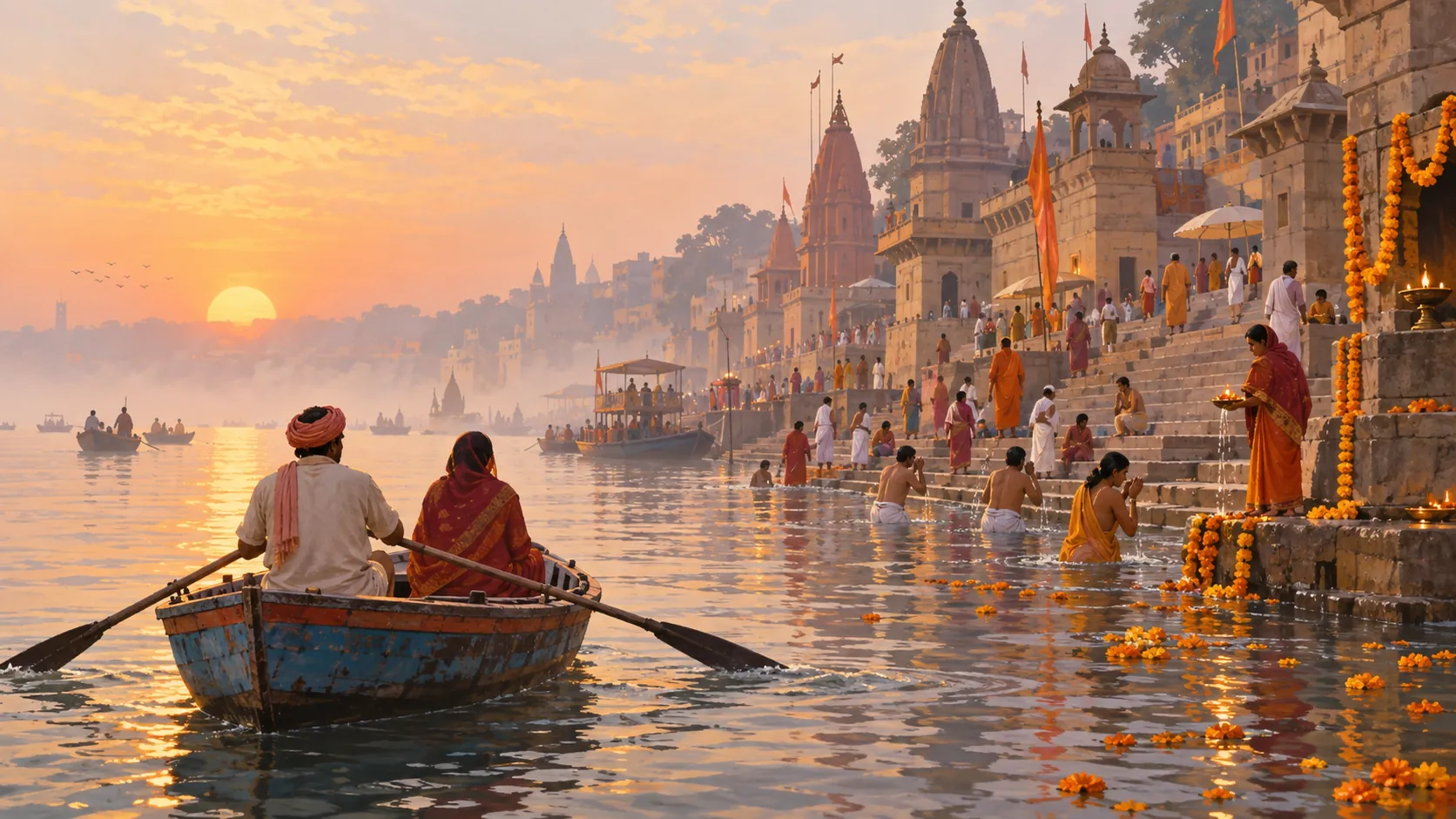
Varanasi's riverfront is a long line of stone steps, called ghats, where people bathe, pray, exercise and meet. Early morning is when the place feels most itself. The light is soft, the air is cooler and the daily rituals are in full swing. By midday the heat and crowds change the mood, so many visitors plan their main riverside time for the first hours after sunrise.
Allow time, and do not expect a quick tick-box visit. The pleasure is in watching the river wake up, not in covering every ghat.
Agree the boat before you board
A rowing boat is the usual way to see the ghats from the water. Boats leave from several points, with Assi and Dashashwamedh among the common ones. Prices and ride lengths vary, and the person who approaches you first is not always the fairest option.
Ask what the price covers, how long the ride lasts and how many people share the boat. Agree it before you step in, and pay at the end. If a boatman suggests extras you did not ask for, you can politely decline. Check current rates with your hotel, since they change with the season and the water level.
Be careful around the cremation ghats
Manikarnika and Harishchandra are working cremation ghats, and they are part of how Varanasi understands life and death. Visitors can see them from the river, but photography of the pyres and the mourners is not welcome. Keep your camera down and your voice low.
If someone approaches you with offers of a guided visit or asks for a donation for wood, step away calmly. Genuine information is easy to find from your hotel or an official guide. You do not owe anyone an explanation.
Walk a stretch of the ghats
Walking along the ghats gives a different view from the boat. Choose a section, such as the stretch between Assi and Dashashwamedh, and take it slowly. You will pass shrines, wrestling gyms, laundry, tea stalls and people at prayer.
Wear shoes you can take off, and watch your step on wet or uneven stone. Stray animals are common, so give them space. Carry water, a hat and small change, and keep your valuables close in the busier lanes.
Add the evening aarti if you have energy
The evening Ganga aarti at Dashashwamedh Ghat is a large public ceremony with lamps, bells and chanting. It draws big crowds, so arrive early if you want a place on the steps or a seat on a boat. Check the current timings, because the start time changes with the season.
If the aarti feels too busy, a smaller ceremony at another ghat can be calmer. Whatever you choose, keep a respectful distance, ask before photographing people and leave the steps clean.
Dress and behave for a place of worship
The ghats are sacred to many people, and visitors share the steps with worshippers. Dress modestly, with shoulders and knees covered, and keep your voice low near prayer. Avoid stepping over offerings or blocking the steps while someone is bathing.
Ask before you take photographs of people, and do not photograph anyone bathing. If you want to enter a temple, check whether it is open to visitors of all backgrounds, since some are not. Your hotel can tell you which ones welcome visitors.
Plan for the weather and the water level
The river rises during the monsoon and some ghats can be partly submerged, which changes the boat routes. Summer mornings are warm even at dawn, and winter mornings can be foggy and cold. Both seasons have their charm, but they ask for different clothes.
Carry a light scarf, a hat and water. In winter, bring a layer you can take off as the sun rises. Check with your boatman or hotel on the day, since conditions can change within a week.
Find out more about ZikPe
Explore ZikPe on its official website. Check the current product information and terms there before choosing a payment service for your trip.
Explore the ZikPe app ↗