
Three sites, not three versions of the same visit
Qutb Minar, Humayun's Tomb and the Red Fort can look like one list of Delhi monuments, but they reward different kinds of attention. The Qutb complex brings a tower, carved structures and a layered archaeological setting. Humayun's Tomb makes the garden part of the architecture. The Red Fort asks you to think about a palace and a capital city, as well as the walls that enclose them. Use those differences to choose a visit rather than trying to finish all three in a day. They sit in different parts of Delhi, so a short trip benefits from making one the main stop. A slower visit can reveal a relationship between a gateway, a path and a building that a quick photograph leaves out.
Qutb Minar: look beyond the tower
The red sandstone Qutb Minar dates from the early thirteenth century, but the surrounding complex matters as much as its height. Look at the change from the tall vertical form to the arcades and gateways around it. The carved pillars and inscription bands give the eye another scale to work with. You do not need to memorise every date to notice how different elements share the space. The Alai Darwaza gateway, the Iron Pillar and the tomb of Iltutmish help turn a tower visit into a visit to a complex. A clear guide or site explanation can help with the buildings' chronology and the reused architectural elements. Keep historical questions separate from a quick assumption based on a single carving; the site's layers deserve a better explanation than a story invented on the spot.
Humayun's Tomb: the garden is part of the idea
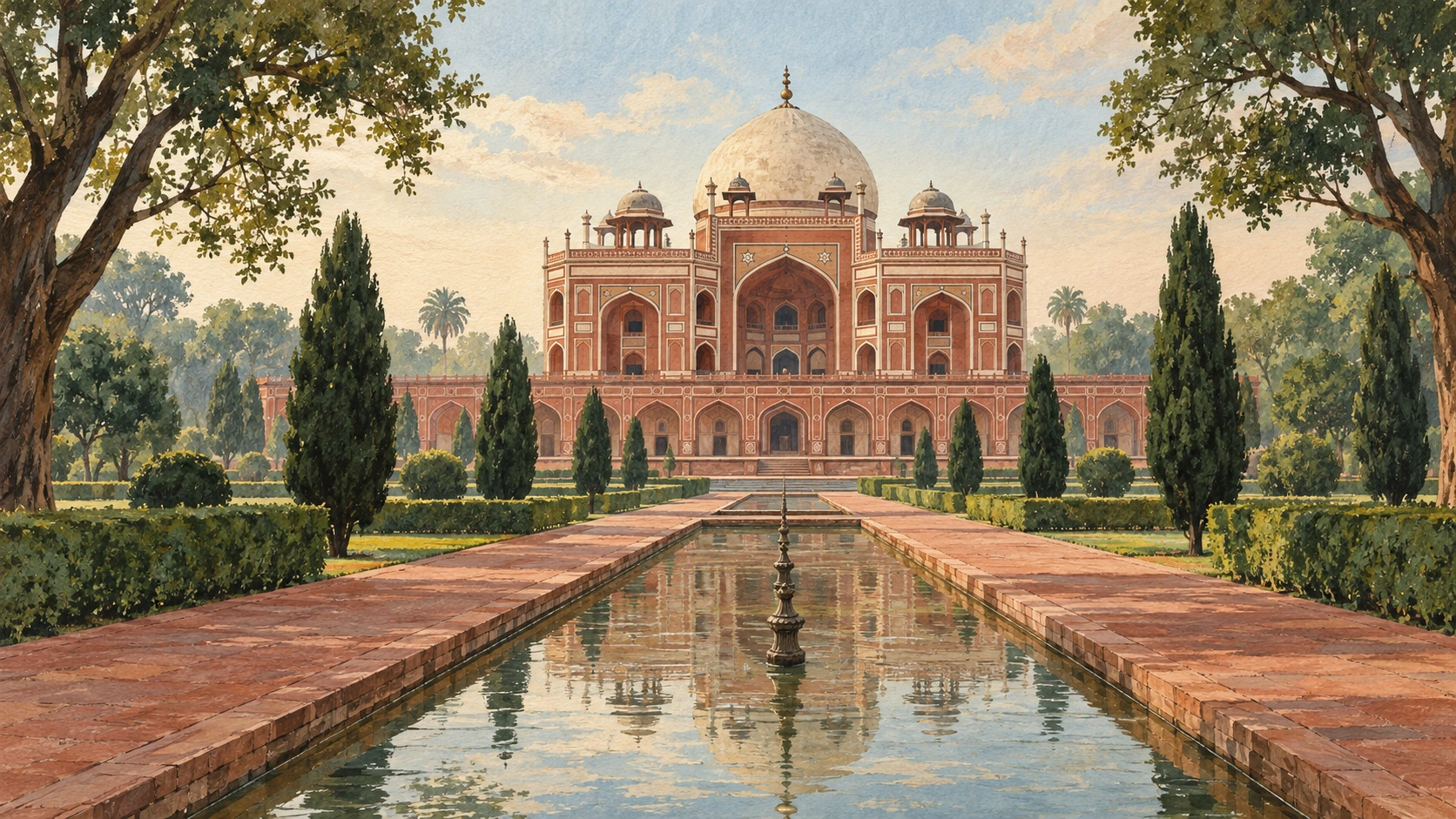
At Humayun's Tomb, spend time with the approach before arriving at the main building. The charbagh layout divides the garden into four parts, with paths and water channels helping organise the view. The building's red sandstone and contrasting marble details belong to a design where setting and monument work together. The tomb helped shape the development of later Mughal garden-tomb architecture. Notice how the raised building changes as you move through the garden and through the gateways. Other tombs within the wider complex give the visit more depth, but you can choose a few details rather than trying to identify every structure. A quiet pause on a path can help you understand the composition more than walking straight to the central chamber and back.
The Red Fort: a palace inside a capital
The Red Fort was built as the palace-fort of Shahjahanabad, Shah Jahan's new capital. The enclosing red sandstone walls are only the beginning of that story. Within the visitor areas, think about how pavilions, gardens and the water-channel design arranged courtly life. The Nahr-i-Behisht, or Stream of Paradise, connected the private apartments in the original scheme. The complex also carries the effects of later military use and changes around the city. That makes it a layered place rather than a palace frozen at one moment. Do not assume every open space or building is in its original form, and do not let one restored room stand for the whole history. A good explanation distinguishes what survives, what changed and what the visitor can see today.
Choose the pace that lets the details land
If you are drawn to the contrast between stone carving and a tall tower, start with Qutb. If garden geometry and a domed tomb interest you, choose Humayun's Tomb. If you want the story of a capital and its palace, give the Red Fort a full place in the plan. A second site can wait for another day; that is a useful choice, not an incomplete visit. Look up the chosen site's current visitor arrangements and ticket category before travelling. Keep time for shade, water and a meal, and follow restrictions around carvings and closed areas. When buying entry, food or a keepsake, check the amount and merchant name before paying. The details you noticed should be what you carry away, not a hurried transaction or a list of gates you passed through.
Purana Qila offers another historical chapter
If the three main monuments above do not match your interest, consider Purana Qila as a different visit. Delhi's South East district account connects its present citadel with Humayun and Sher Shah Suri, while Incredible India describes its walls, gateways and buildings. It is not another name for the Red Fort and should not be fitted into the day on that assumption. Look at how a gateway, enclosure and surviving structure relate to one another. Ask about the current visitor route and any exhibition or museum access separately. Archaeological findings, remembered traditions and a building's surviving fabric are different kinds of evidence; a good explanation should make those distinctions rather than turning a legend into a settled fact.
Read the complex, not only its most famous object
UNESCO's Qutb account treats the tower and surrounding monuments as an ensemble. Its Red Fort account describes a palace-fort and the planning of court life, while the Humayun's Tomb record places the garden-tomb design in a wider architectural story. That gives each visit a clear question: how do the parts work together? At Qutb, compare the scale of the tower with nearby structures. At Humayun's Tomb, notice the approach and the raised building. At the Red Fort, look for relationships between the surviving visitor spaces rather than expecting every room of the original palace to remain. A label or well-grounded guide can help you understand what has changed.
Admission and access belong to today's visit
A heritage description establishes why a place matters, not the present ticket total, every opening day or permission to enter a closed area. Check the official visitor information for the exact monument before travelling. Confirm the appropriate ticket category and any separate exhibition, equipment or guided-visit arrangements rather than using an old screenshot as the final plan. If steps, long distances or heat matter to someone in your group, ask about the route from the real entrance and the support available. A monument photograph does not show the whole visit. Do not assume tower access, rooftop access or an archaeological work area is included because the structure appears on a destination page.
Give history room without giving the city a race
The choices are different: Qutb for a layered architectural ensemble, Humayun's Tomb for the garden-tomb relationship, Red Fort for palace and capital history, or Purana Qila for another citadel chapter. Pick the one that answers your interest and leave time for a meal and the journey. This is not a top-monument ranking or a timed route across Delhi. Use the actual entrance in your travel plan and check current conditions close to departure. Keep off carvings, follow barriers and respect other visitors. If you want more explanation, choose a guide or interpretation with a clear basis for its claims. You should leave remembering a relationship or a detail, not only that four famous names were on your list.
Lutyens' Delhi: a ceremonial avenue, not another monument ticket
For a different reading of Delhi, choose Kartavya Path and the India Gate setting. Delhi Tourism places this ceremonial axis between Rashtrapati Bhavan, Vijay Chowk and India Gate and connects its design with Edwin Lutyens. A public-space walk does not include access to government buildings or every lawn. Check current security restrictions and event closures, carry water and keep the walk short in heat or poor air quality.
Lodhi Art District: murals among homes
The Ministry of Tourism's Utsav portal documents an art walk among Lodhi Colony's painted residential blocks. This establishes a street-art setting, not a current scheduled tour or a guarantee that every mural remains unchanged. Read the work without blocking entrances, photographing residents without asking or climbing on a wall. Lodhi Art District and Lodhi Garden are different places: choose the one that matches your interest, or arrange transport and time for both.
Hauz Khas: separate the medieval complex from the village
Delhi Tourism describes the Hauz Khas fort complex beside its historic reservoir. Give the ruins and water setting time before deciding whether to browse the surrounding village's shops or eat there. A village cafe booking is not heritage-site admission, and commercial opening hours do not establish access to the ruins. Stay on permitted paths, keep back from water edges and verify the return route rather than following an unlit shortcut.
Find out more about ZikPe
Explore ZikPe on its official website. Check the current product information and terms there before choosing a payment service for your trip.
Explore the ZikPe app ↗Sources and checks
Independently researched and updated 26 October 2026. Current access, weather, prices and opening arrangements must be checked before travel.