Begin where the city meets the water
Fort Kochi is a historic coastal neighbourhood, not a single monument behind a gate. Its streets carry Portuguese, Dutch and British architectural influences alongside homes, shops and the ordinary work of a modern city. Walk with that mixture in mind. You are entering a neighbourhood, not a set arranged for visitors.
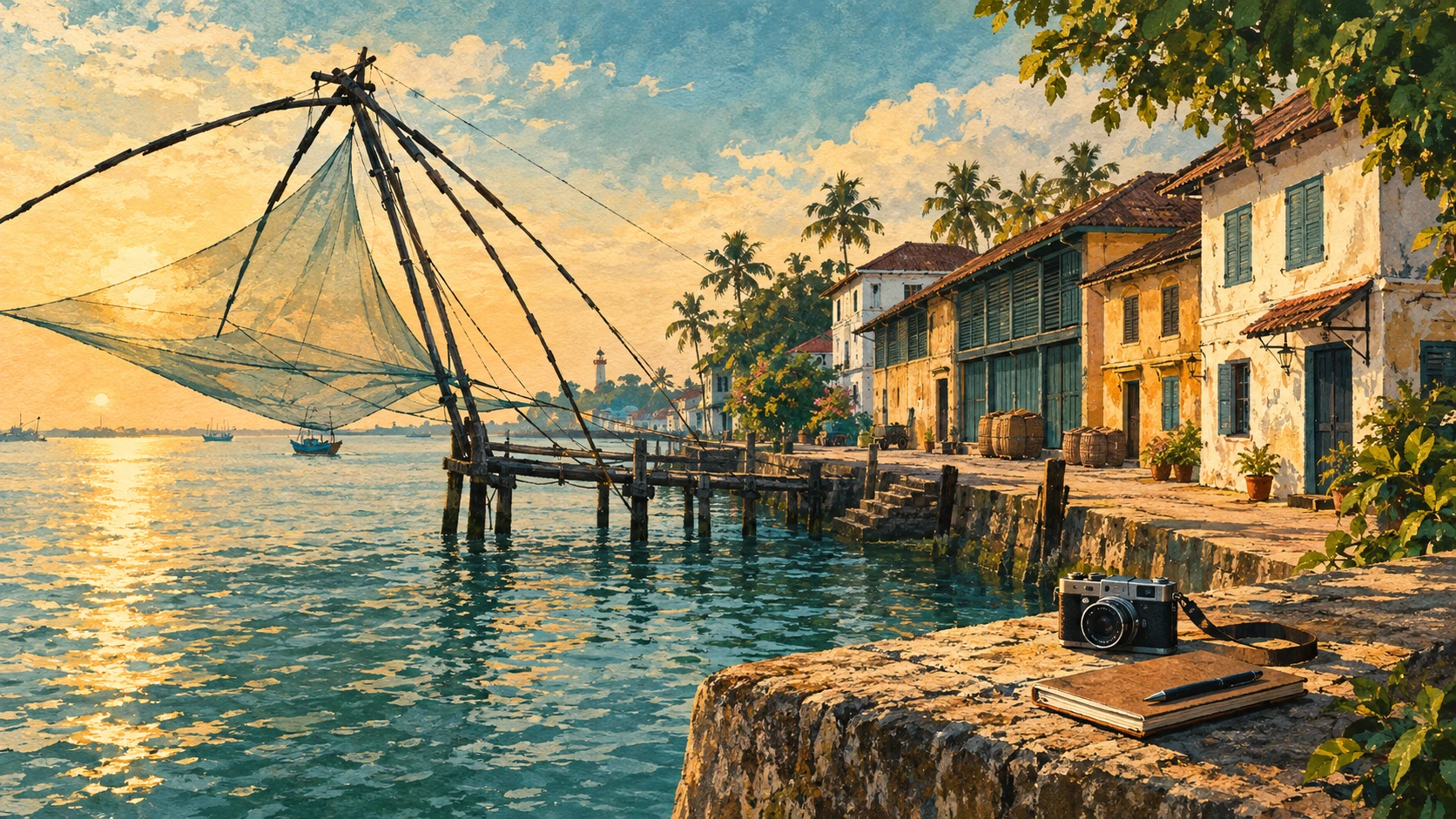
The waterfront near Vasco da Gama Square gives the day a clear starting point. The shore-fixed Chinese fishing nets are cantilever structures worked with timber, ropes and counterweights. Watch the balance of the rig rather than expecting a performance on demand. Keep clear of equipment and ask before approaching people at work.
Look slowly at the streets behind it
Move inland for a small selection of heritage stops. St. Francis Church and Santa Cruz Basilica offer two possible anchors; you do not need to visit every landmark in a single morning. Check visitor access, dress respectfully and follow the rules inside places of worship. A service is not a sightseeing inconvenience to be worked around.
Between stops, notice the change from waterfront to residential streets. A doorway, a shaded veranda or a reused building can be as revealing as the next plaque. Ask before photographing people or the interiors of shops. Choose a cafe when you want a break, without assuming that a name in an old guide guarantees current opening or the same menu.
Treat Mattancherry as the second chapter
Mattancherry adds another layer to the story of Kochi as a trading port. Its history includes several migrant communities and a close mix of religious and commercial spaces. Give it its own part of the day rather than treating it as a quick detour after you have already run out of energy.
Walking between the two areas may suit some visitors, but heat, rain and the route itself can change that decision. Check the map and your own comfort. Taking local transport for part of a heritage day does not make the visit less meaningful. Arrive with time for one interior and a little street life, not a sprint between closing doors.
Choose an interior that changes your understanding
Mattancherry Palace is also called the Dutch Palace, but the name compresses a more complicated history: it was built by the Portuguese and later renovated by the Dutch. Its Kerala-style courtyard plan, royal objects and murals make it a useful stop for looking beyond the waterfront image of Kochi.
The Paradesi Synagogue, built in 1568, is another distinct part of the area. Its tiled floor, lamps and clock tower belong to a religious and community history, not merely an attractive photograph. Verify visiting arrangements for both sites before your day. Religious observance, closures and photography restrictions take precedence over an itinerary.
Leave room for the trading streets
The lanes around the synagogue contain shops and galleries, while Mattancherry also retains a spice-trading presence. Notice the difference between a visitor-facing souvenir display and a working business. Do not block deliveries or treat every warehouse as an invitation to enter.
A satisfying outline is simple: waterfront and one Fort Kochi stop in the first part, lunch and one Mattancherry interior in the second. Reverse it if access or weather makes that easier. This is a flexible walking idea, not a timed tour or a promise of site entry. You should finish with a clearer sense of how water, trade and communities shaped the city, not just a phone full of facades.
Add a camera without turning the walk into a shoot
A good Kochi photo walk can follow the same two-part route, with a different pace: fewer interiors, more time to notice the light and a willingness to leave a picture untaken. The fishing nets, the streets behind the waterfront and the trading lanes of Mattancherry give you different subjects without needing a separate itinerary.
Kerala Tourism and Incredible India describe these as a historic coastal neighbourhood and a working port landscape. That distinction should guide the camera. A place of worship is not a backdrop, a warehouse is not an open studio, and a person going about their day does not owe you a portrait.
At the nets, compose from safe public space
The Chinese fishing nets are the clearest structural subject: diagonals of timber, hanging ropes and a broad horizontal line of water. Try a wide frame that shows their relationship to the shore, then a tighter view of the equipment from a safe public position. Do not climb onto a platform or touch a rope for a better angle.
Kerala Tourism suggests morning or evening for seeing the nets in use and describes the waterfront sunset. Treat those as possible conditions, not a promise that a net will be working or the sky will be clear. If people are operating equipment, ask before making a close photograph and agree any requested payment before accepting a demonstration.
Make the next photographs smaller
Behind the waterfront, look for the texture of an old wall, a window in shade or the rhythm of repeated doors. Around St. Francis Church and Santa Cruz Basilica, start with the exterior from permitted public space. Wait until worshippers can pass rather than planting yourself in a doorway.
At Mattancherry, a shopfront, a street sign or packed goods can suggest the trading history without putting a lens into someone's workspace. Ask a shopkeeper before photographing inside, and accept a no without negotiating. Do not move stock, step into a delivery lane or assume a purchase buys permission to photograph staff.
Some interiors belong in your notebook
Kerala Tourism describes the Paradesi Synagogue's blue patterned floor tiles, chandeliers and clock tower, and Mattancherry Palace's murals. These are reasons to visit, not evidence that photography is permitted. Check the posted rules and the staff's instructions at each entrance; any ticket, tripod, video or flash rules may be separate.
If interior photography is restricted, put the camera away and write one detail you want to remember. An exterior photograph plus a thoughtful note is better than a forbidden image. Do not treat an old visitor account as permission, and do not photograph a religious service without explicit approval.
Choose light and comfort before a long shot list
Give the waterfront one unhurried session and the streets another, with a shaded break between them if the weather calls for it. Keep the bag light enough to walk comfortably, protect equipment from rain and salt spray, and stop using the camera while crossing a road or boarding transport.
This guide makes no claim about current site-entry times, photography charges or a guaranteed sunset. Confirm access on the day, and shorten the route if heat, rain or closures make it sensible. The strongest set of pictures will show water, buildings and trade in context, with the people who live here left room to live.
Find out more about ZikPe
Explore ZikPe on its official website. Check the current product information and terms there before choosing a payment service for your trip.
Explore the ZikPe app ↗