
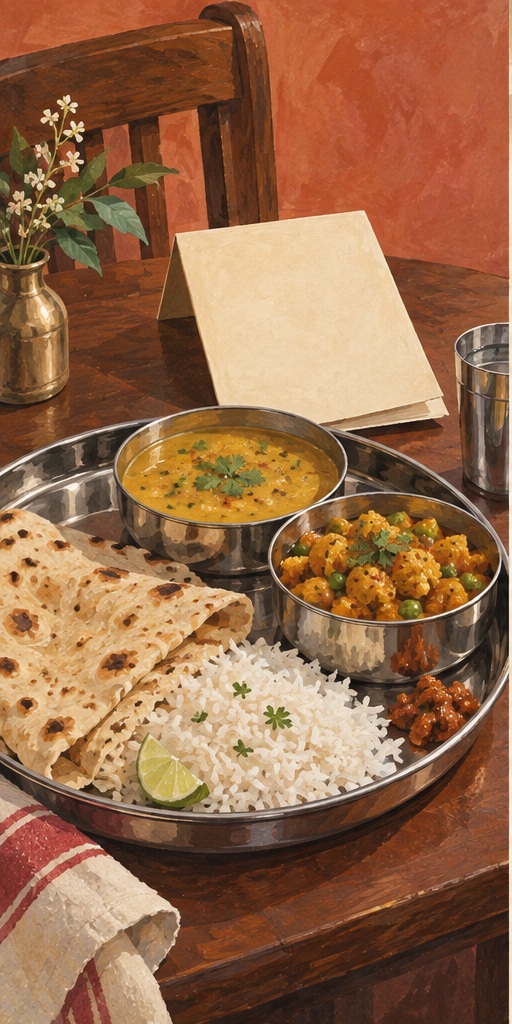
Choose the meal before choosing the dishes
An unfamiliar menu is easier when you decide what sort of meal you want. A quick breakfast, a shared lunch and a long dinner need different orders. Start there rather than treating the menu as a list of things you are expected to try. India does not have one uniform restaurant vocabulary. A dish you recognise may be prepared differently in another region or kitchen. Ask for a short explanation when a name is unclear. You do not need to know every word to order well; you need to understand the few things you are actually buying.
Use a familiar structure as the starting point
A thali often brings several parts of a meal together on a plate, which can make it a useful first choice. Ask what is included, whether it is vegetarian and whether additional servings cost extra. The word alone does not tell you the size or the contents. For a shared meal, choose a main dish and the rice or bread that goes with it before adding more. Dal refers to pulse-based preparations; paneer is a fresh cheese. Neither name describes every ingredient in the finished dish. A sauce may contain cream, butter, nuts or other additions that matter to your diet.
Breakfast has its own language
Idli and dosa are familiar starting points in southern food traditions. Idli are steamed cakes, while dosa is a thin cooked pancake, often served with accompaniments. The menu may offer several batters, fillings and sizes, so ask what the version in front of you contains. A plain item may be enough with its accompaniments. Do not assume you need to order every chutney or bowl separately, or that every listed side is included. A brief question about the serving makes the meal easier and keeps you from ordering twice the food you intended.
Explain restrictions as ingredients, not guesses
If you avoid meat, eggs, dairy or a particular ingredient, say so clearly. Vegetarian does not automatically mean vegan. For an allergy, ask about the ingredient and shared preparation equipment, not only the dish name. If the kitchen cannot give a clear answer, choose somewhere that can. Similarly, ask what can actually be adjusted if you prefer less heat. A sauce or filling may already be prepared. Requesting mild is useful communication, not a guarantee that every dish can be changed. It is better to choose a suitable preparation than to expect a finished one to become something else.
Check the serving and enjoy the first plate
Ask whether a dish is intended for one person or for sharing. Check whether rice, bread and drinks are separate, and read the listed taxes or service charges before settling the bill. If an item is seasonal or unavailable, let that guide the choice instead of chasing a photograph from another menu. A Kerala sadya, for example, is a vegetarian feast with rice and several accompaniments, traditionally served on a plantain leaf. It is a different experience from building an order dish by dish. Let the meal explain its own format. A good first order is one you understand, can comfortably eat and would be glad to repeat.
Roti, naan and paratha answer different bread questions
Roti commonly describes a flatbread, naan a leavened bread often cooked in a tandoor, and paratha a bread that may be layered or filled. The exact flour, fat and preparation depend on the kitchen. Ask whether a bread comes buttered, how large it is and whether a filling changes the order. Bread is often charged separately from a main dish. Choose it to accompany the meal rather than treating every bread name as a separate course.
Biryani, pulao and plain rice are not interchangeable sides
A biryani is usually an assembled rice dish with its own seasoning and vegetables or meat; pulao is another seasoned rice preparation. The distinction is useful without pretending every regional recipe follows one definition. Ask whether the serving is a main meal and what accompaniments are included. A plain rice portion alongside dal may be a better-sized order than a full biryani added to an already large table.
Tandoor and curry describe different clues
Tandoor points to an oven or cooking method, while a curry listing usually directs you toward a prepared dish with sauce or gravy. Tikka often names pieces rather than establishing one fixed sauce, and paneer means a dairy ingredient, not a guarantee of mildness. Ask how the actual dish is cooked. A kitchen may not be able to remove nuts, dairy or chilli from a sauce that has already been prepared.
Leave room for a small starter or sweet
Samosas and pakoras are commonly fried snack choices; chaat describes a wider sweet-sour-spiced snack family. They need not all precede a complete meal. For a sweet finish, kulfi is a frozen dessert while gulab jamun is commonly served in syrup. Ask about milk, nuts, portion size and serving conditions. A shared small order is often enough to understand a new preparation without losing the rest of the meal.
Find out more about ZikPe
Explore ZikPe on its official website. Check the current product information and terms there before choosing a payment service for your trip.
Explore the ZikPe app ↗Sources and checks
Independently researched and updated 26 October 2026. Current access, weather, prices and opening arrangements must be checked before travel.