No single rule explains every visit
India’s places of worship, homes, workshops and public spaces have different practices. A useful visitor does not arrive with a checklist meant to describe everyone. Start with the particular place and the people responsible for it.
A little uncertainty is normal. Ask a simple question when the boundary is unclear, and make room for an answer that differs from the last site you visited. Curiosity works better when it is paired with permission.
Footwear and dress need local attention
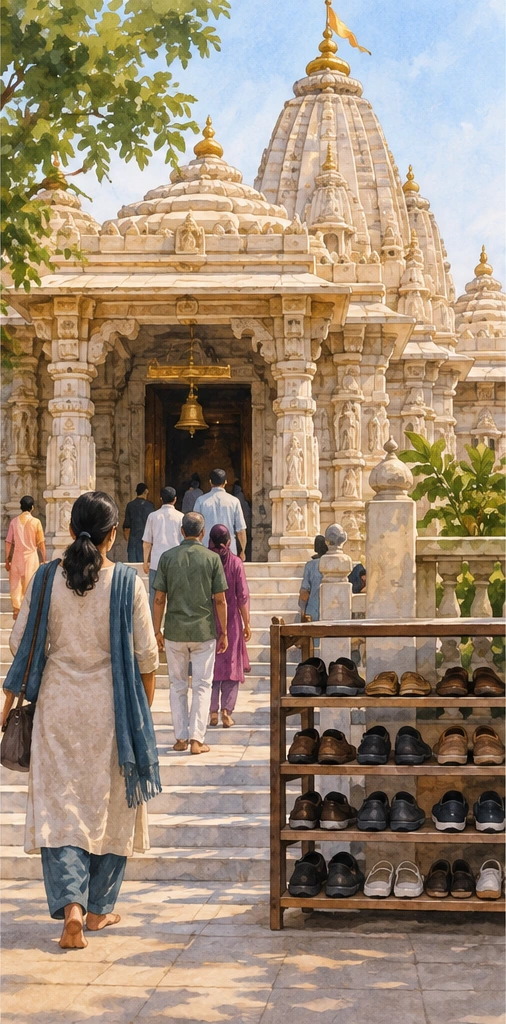
Some places of worship require shoes to be removed. Look for the designated arrangement and follow current directions. Do not assume a public approach and the worship area share the same rule, or leave shoes where they block another visitor.
Dress requirements also differ. Check the site’s guidance before leaving, particularly if a head covering or additional coverage may be needed. A borrowed scarf is not an automatic solution to every requirement. If an area is restricted, respect the restriction.
A camera changes the interaction
Ask before making a portrait or filming someone’s work. Permission to enter does not necessarily include permission to record, and consent to one picture is not unlimited consent for a video or public post.
At ceremonies, avoid blocking the view or putting a camera close to worshippers. Follow photography signs even if someone else ignores them. Where no clear rule is visible, ask the organiser or responsible staff rather than testing how far you can go.
Be clear about participation and money
You may respectfully observe a practice without taking part in something you do not understand. If someone offers a guided explanation, ritual service or workshop, clarify whether it costs money and what is included before agreeing.
Do not let a hurried queue or a friendly invitation turn into an unclear commitment. A stated donation, an optional offering and a ticket are different arrangements. Ask which applies, using the responsible source for the activity.
Give ordinary life room to continue
A lived-in neighbourhood is not an open-air museum. Keep doorways and lanes clear, do not look into private interiors, and avoid treating people as scenery. Workshops need room for work even when visitors are welcome.
If corrected, adjust without arguing that another place allowed it. The goal is not to prove you memorised the right custom. It is to visit with attention, leave the space usable and let the people who use it define the boundary.
Find out more about ZikPe
Explore ZikPe on its official website. Check the current product information and terms there before choosing a payment service for your trip.
Explore the ZikPe app ↗