Give Pune more than one kind of attention
Pune's history is not contained in a single palace or a drive to the hills. An old-city walk, a collection of everyday objects and a place tied to India's independence movement each offer a different way into it. With two days, choose those contrasts rather than building a route that spends most of its time crossing the city.
This plan keeps the first day focused on the historic centre and gives the second day room for the Aga Khan Palace. It is a starting point, not a promise that every site will be open at a particular hour. Check the current visitor arrangements for your dates and keep a meal break close to each outing.
Day one: begin at Shaniwar Wada
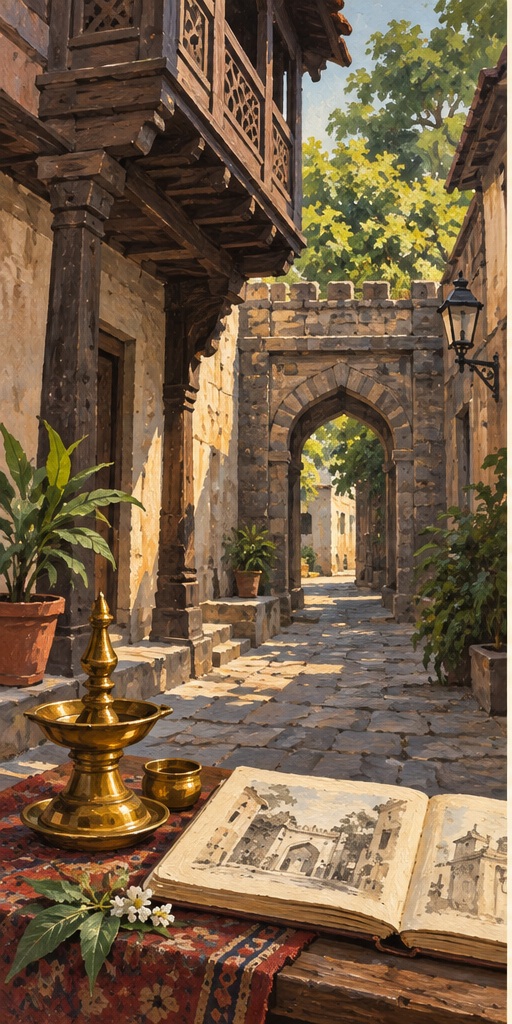
Shaniwar Wada was the seat of the Peshwas. The surviving complex is not an intact palace full of furnished rooms: a fire in 1828 changed what remains. Look at the gateway, the enclosing structures and the organisation of the site, then use an explanation to imagine what once occupied the spaces within it.
The difference between a surviving wall and a vanished building is part of the visit. Do not mistake every open area for the original layout or treat an illustrated reconstruction as something still standing. A guide who makes those distinctions clear will add more than a quick account of famous names. Keep the walk unhurried enough to see how the site relates to the streets outside.
Let objects tell the next part of the story
The Raja Dinkar Kelkar Museum, in Shukrawar Peth, changes the scale of the day. Its collection brings attention from large buildings to things made, handled and used. The lamps gallery is a useful place to begin: standing lamps, small lamps and hanging forms show how one familiar object can take many shapes.
Look at material and purpose before trying to identify every piece. A lamp's balance, its wick holder or the way it hangs can be as interesting as its ornament. The museum's wider collections offer more directions to follow, but one gallery seen carefully is a worthwhile visit. Confirm the museum's current hours and ticket categories directly before travelling.
Day two: the Aga Khan Palace and a slower afternoon
The Aga Khan Palace belongs to a different chapter. It is associated with the detention of Mahatma Gandhi and others during the Quit India Movement, and with Kasturba Gandhi and Mahadev Desai, who died there. Approach it as a place of memory as well as an architectural visit. The displays and grounds give context that the building's exterior alone cannot supply.
Do not schedule it as a brief photograph between unrelated stops. Allow time to read, walk and pause, then leave the afternoon flexible. A meal or a shorter neighbourhood outing can be enough. If a particular exhibition matters to you, check its current access rather than assuming all rooms and displays are available.
Keep the hill forts out of this city itinerary
A fort or hike outside Pune can be a separate good trip, but adding one here changes the plan. Transport, weather, path conditions and the time needed to return deserve their own decisions. A two-day city visit is not incomplete because it stays within Pune.
For meals, you can explore misal pav or a mastani drink without treating an unverified restaurant ranking as a guarantee. Ask about spice, ingredients and portion size, and confirm the bill before paying. Agree on pickup points when taking a ride across the city. The itinerary works best when a practical choice protects time for the next place, rather than adding another stop just because it is nearby on a map.
Find out more about ZikPe
Explore ZikPe on its official website. Check the current product information and terms there before choosing a payment service for your trip.
Explore the ZikPe app ↗Build the rest of your city visit
Choose the chapter that fits your day. These companion guides cover food, shopping, stays and activities in more detail; they are alternatives, not a checklist for one outing.
Open the Pune companion guides
- Conrad Pune: a city hotel for a clear daily plan
- Eating in Pune: misal, a simple meal and room for mastani
- Hidden Pune: offbeat experiences and how to find them with care
- O Hotel Pune: a Koregaon Park stay with the room details checked
- Pataleshwar in Pune: a rock-cut pause inside the city
- Pune cafe breaks: Vohuman breakfast or German Bakery in Koregaon Park
- From Pune: choose a hill fort or a cave day
- A Pune food day: misal in the morning, an Irani cafe pause and a bakery box
- Pune food: misal, vada pav and a day without rushing
- Pune picnic and hike spots: how to choose a day out near the city
- Pune shopping: Laxmi Road, Tulshibaug and a browse with a clear aim
- Pune stays: budget, boutique or heritage? How to choose your style
- Pune weekend escapes: how to choose a quiet stay in the hills and lakes
- Santé Spa Cuisine, Pune: read the plant-led menu dish by dish