
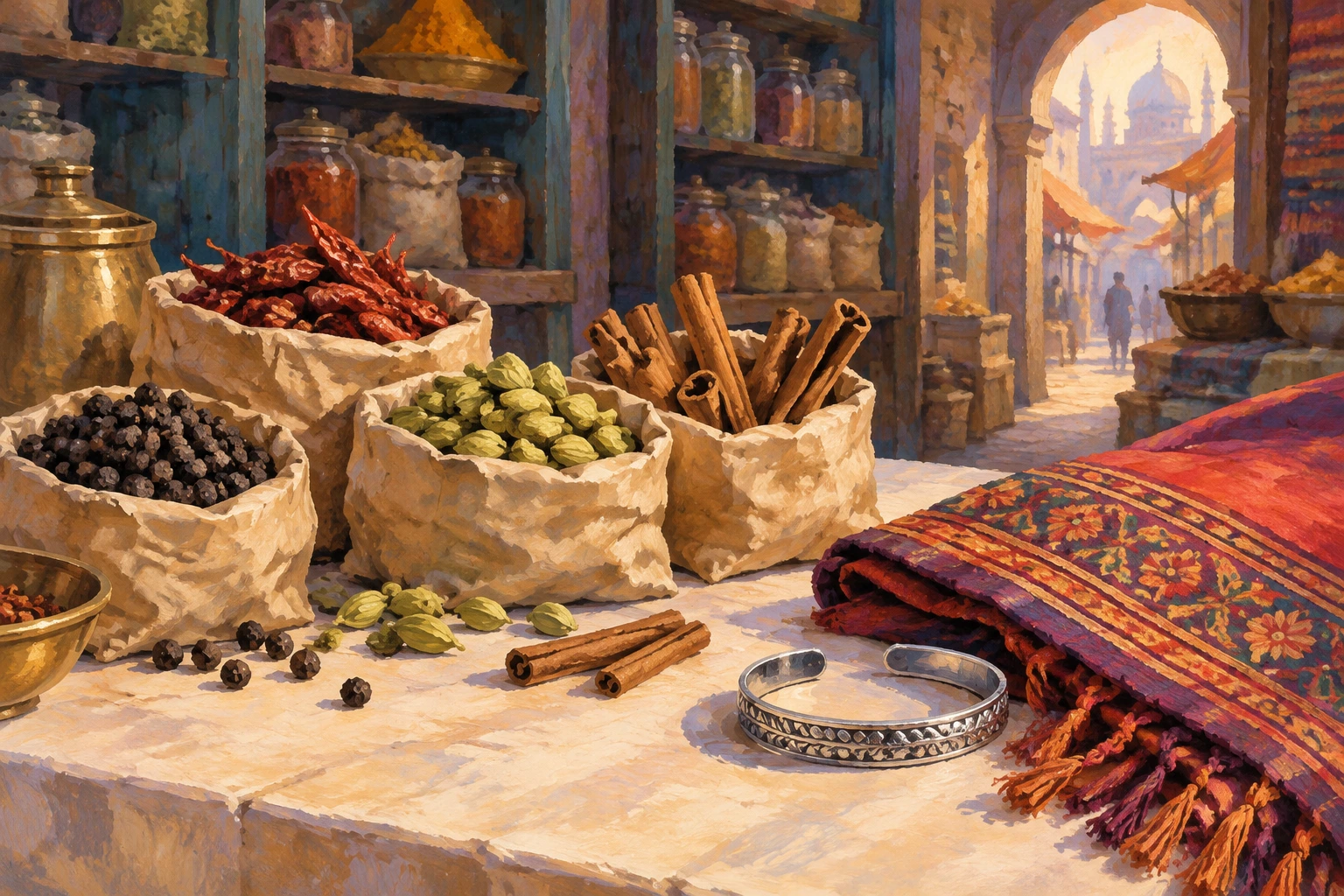
Decide what kind of afternoon you want
Delhi shopping feels less bewildering when the visit begins with a purpose. A craft browse, a search for fabric and a jewellery purchase are different outings. Choose one as the main plan rather than trying to fit every market into a day. The useful question is not which market is best, but which one matches the thing you want to find.
Dilli Haat at INA offers a craft-market setting with food alongside the browsing. Chandni Chowk offers an old-city market visit with specialised lanes. Neither is a promise that every stall has the same stock, price or quality. Go with curiosity, a budget and enough time to look at the piece before deciding whether it belongs in your bag.
Dilli Haat for a craft-led browse
Make Dilli Haat a standalone stop if you want to spend time with textiles, pottery and other handicrafts. Its setting brings craft stalls and food together, so there is room to stop for a meal rather than shop continuously. Check the current visitor entry arrangements before heading there. Do not confuse a ticket to the market with a credit towards a purchase.
Let the stallholder explain a piece that interests you. Ask what it is made from, where it was made and how it should be cared for. A maker's explanation can help you appreciate the work, but a description such as handmade still deserves a close look at the object. Examine the reverse of a textile, the joins on an item and the finish where your hand naturally rests.
Chandni Chowk: follow the kind of item
Chandni Chowk makes more sense when you choose a lane according to the shopping. Kinari Bazaar is a useful starting point for trims and embellishments such as borders, beads and lace. Nai Sarak is associated with books and stationery. Dariba Kalan is associated with jewellery. A plan based on the item gives a busy old-city walk more direction than wandering until you feel obliged to buy something.
Keep the purchase small if you are only browsing. A border or a notebook can be easier to judge and pack than a major jewellery purchase. If you do want something valuable, allow time for documentation and a second comparison. A crowded shop is not a reason to hurry the decision, and an attractive display is not evidence of a metal's purity.
Look closely before comparing the price
For fabric, ask whether the price is per metre or for the whole piece, and check its width, material and any tailoring charge separately. Look for marks, pulled threads and uneven colour in natural light when possible. Ask what washing or dry-cleaning is recommended. The cheapest piece is not a bargain if it needs care you cannot give it.
For pottery or a delicate craft, examine chips and cracks, then ask for packing suitable for your journey. Think about size and weight before paying. If it is a gift, choose something the recipient can actually use rather than a large object you have no easy way to carry. A smaller, well-chosen piece can hold the memory of the afternoon just as well.
Finish the purchase with the details clear
Agree on the final amount, what is included and whether an exchange or return is offered. Do not assume a small stall follows the same policy as a department store. For a consequential purchase, get a receipt describing the item rather than a slip with only a total. Keep any promised delivery or alterations in writing.
Check the merchant name before paying and stay with the shop until payment status is clear. If an attempt is pending, do not immediately repeat it without checking the result. Put the receipt with the item and make sure the packing is the packing you agreed on. The visit should end with a purchase you understand, not a story you have to untangle later.
Khari Baoli: choose spices you can use
Incredible India's Chandni Chowk guide identifies Khari Baoli with the wholesale spice trade. That makes it a useful place to focus a food-shopping visit, but not a guarantee that every shop sells the same quality or welcomes the same small order. Start by asking whether the seller can supply the quantity you actually want.
Choose one or two ingredients you know how to cook with. Ask whether a blend contains salt, what the ingredients are and how it should be stored. A strong smell is not a substitute for a clear description. For a gift, sealed, labelled packaging is easier to explain and carry than an anonymous bag of powder.
Dariba Kalan: separate the design from the metal claim
The same national tourism guide associates Dariba Kalan with gold and silver jewellery, pearls and ittar. You can enjoy the designs without treating a market's reputation as proof of an individual piece. Ask what the item is made from, whether it is plated and what the seller will put on the invoice.
For a silver purchase, get the claimed fineness, weight, making charge and final amount explained separately. Inspect any marking and ask how its claim can be checked before paying. A silver-coloured finish is not evidence of silver content. If the documentation or explanation remains unclear, choose a decorative item priced as such or leave the purchase for another visit.
A small souvenir does not need a grand story
Kinari Bazaar's trims and embellishments and Nai Sarak's books and stationery offer another direction when you want a modest gift. Pick a border for someone who sews, a notebook for someone who writes or a small piece of craft whose use you understand. The right object does not have to be the most dramatic one in the shop.
Avoid treating an old-looking object as a verified antique. Delhi Tourism's Old Delhi shopping page itself cautions about dubious authenticity in some souvenir descriptions. Ask about materials and origin, but do not convert a seller's story into a certificate. For an expensive or supposedly historic object, get proper documentation and check the rules that apply before considering it.
The journey home is part of the purchase
Before buying food, check your destination's customs rules for the specific ingredient and packaging. Do not assume every spice, seed or plant product is allowed because it fits in cabin baggage. Keep the label and receipt with the purchase; choose a different gift if its import status remains uncertain.
For jewellery and breakable crafts, decide how you will carry them before negotiating. Ask for the packing you need, check it before leaving and keep the item description on the receipt. Confirm the merchant and payment status at the counter. A satisfying market walk ends with something you can explain, use and take home without an unresolved question.
Sources and planning note
Find out more about ZikPe
Explore ZikPe on its official website. Check the current product information and terms there before choosing a payment service for your trip.
Explore the ZikPe app ↗