Four ways to pay without notes
Visitors usually meet four cashless options: payment cards, QR codes tied to UPI, prepaid wallets and app-based payments inside ride or booking apps. Each suits a different kind of purchase, and none works everywhere.
Knowing which fits which situation saves awkward moments at the counter.
Think of cashless as a layer on top of a small amount of cash, not a full replacement.
Cards
Hotels, mid-range and upscale restaurants, malls and many shops take Visa and Mastercard. Look for a card machine at the counter or a card logo on the door. Small stalls and local eateries often do not have one.
Ask before you order if you plan to pay by card. A quick question avoids an embarrassing search for an ATM.
Contactless tap is spreading but is not universal, so be ready to insert the card and enter a PIN.
QR codes and UPI
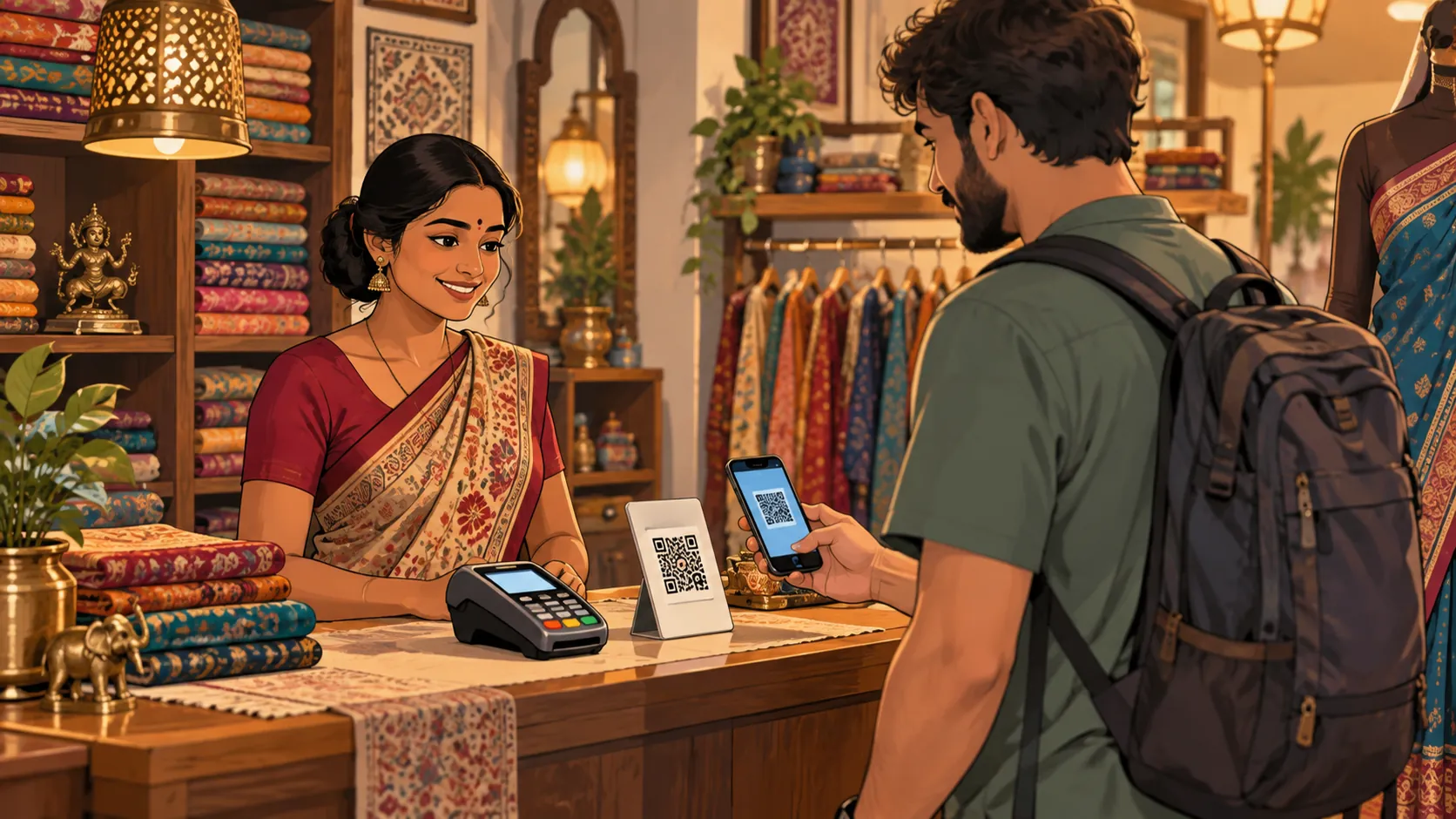
The QR code at a counter belongs to the shop's bank account. People pay by scanning it in a UPI app. A normal UPI app needs an Indian bank account and mobile number, so many visitors cannot use one directly.
The National Payments Corporation of India has described a prepaid wallet called UPI One World for inbound travellers, which is meant to work without an Indian SIM or bank account. Check its current terms before you rely on it.
If you are curious, watch how locals pay. The process is quick, and shopkeepers usually enjoy explaining it.
Payments inside apps
Ride apps, food delivery and booking platforms often let you pay inside the app with a card. Some also offer cash on delivery or at the end of a ride. Check which option your account supports, because a foreign card can be refused by some apps.
Save your confirmation screens. They help if a charge looks wrong later.
Keep your phone charged, and carry a power bank on long days.
Where cashless runs out
Rural areas, small temples, village markets, local buses and many rickshaws still prefer notes. Network trouble can also stop a card machine or a QR payment for a while.
Withdraw cash in a bigger town before you head somewhere remote, and keep small notes for tips and snacks.
Planning a day ahead is far easier than solving it at the counter.
Staying safe
Check the merchant name on the screen before you confirm a QR payment. Do not share one-time codes or passcodes with anyone. Keep an eye on your card when it is taken away to a machine, and ask to pay at the counter where possible.
If you see an unfamiliar charge, contact your bank early and note the time and place of the purchase.
A calm routine each evening, such as checking your statement, catches problems early.
A sample day
Breakfast at a hotel goes on a card. A morning auto-rickshaw ride is cash. Lunch at a small cafe might take a QR code or cash. A museum ticket may be at a counter with its own rules. Dinner at a restaurant takes a card.
By the end of the day you have used three methods without thinking much about it. That is what a good mix looks like.
A short checklist
Before you leave the hotel, check that you have a card, a few small notes, a charged phone and your hotel's address in a note. Ask the front desk which nearby places prefer cash.
When something does not work, stay relaxed and switch to the next option. Shopkeepers are used to it and will help.
A ZikPe note
Check ZikPe's official product information, eligibility and current terms before relying on it for a trip. Keep another payment method available and confirm that the merchant accepts the method you intend to use.
Find out more about ZikPe
Explore ZikPe on its official website. Check the current product information and terms there before choosing a payment service for your trip.
Explore the ZikPe app ↗