
Three tools, three jobs
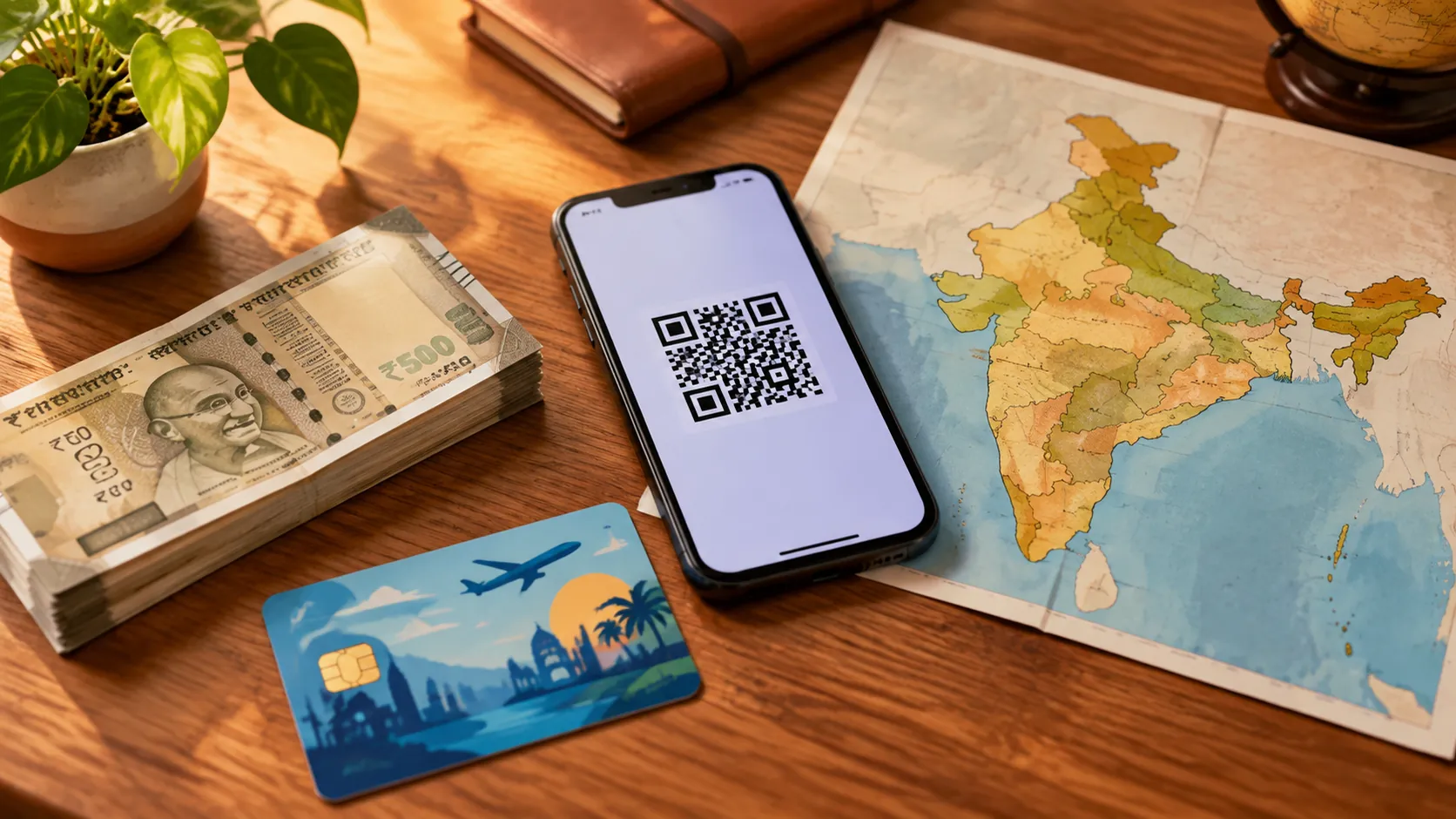
Cash, a forex or travel card and UPI do different jobs. Cash handles small and informal purchases. A card handles hotels, shops and bigger bills. UPI handles the huge number of everyday merchants who show a QR code.
None is best everywhere. The useful question is which tool fits the next purchase.
Most visitors end up using two or three, and that is normal.
Cash
Cash is accepted almost everywhere and needs no network. It is the easiest way to pay for tea, street snacks, rides and tips. The downsides are carrying it safely, finding change and the cost of getting rupees in the first place.
Exchange at banks or authorised counters, count the notes and keep the receipt. Avoid street offers that sound too good.
Spread notes across a few places, and keep small denominations handy.
Forex or travel card
A prepaid travel card loads foreign currency and spends in rupees. Issuers set their own fees, rates and limits, so read the schedule of charges for the card you are considering. Cards can offer a record of spending and a lock option if lost.
Check the cross-currency mark-up, ATM fees, reload fees and any inactivity fee. Those details vary by issuer and change over time.
Carry a backup card in a separate place in case the first is lost or blocked.
UPI
UPI lets people pay by scanning a QR code in a phone app. It is fast, widely accepted and often the preferred option at small shops. A normal UPI app needs an Indian bank account and mobile number, which most visitors do not have.
NPCI has announced a prepaid wallet for inbound travellers called UPI One World, designed to work without an Indian SIM or bank account. Eligibility and providers can change, so confirm current terms first.
If UPI is not available to you, the shop will almost always take cash.
Putting them together
A simple mix works well: a modest amount of cash for small things, a card for hotels and restaurants, and a digital option for QR merchants if you can set one up. Review it every few days and adjust.
If one tool fails, the others carry you through.
Do not decide everything before you arrive. Learn what the first city expects and adapt.
Costs worth comparing
Before you go, compare the actual terms of what you plan to use: exchange rates, fees, limits and refund rules. Get them from the provider's own pages, not from a summary. A small difference per purchase adds up over a trip.
Write the numbers in a note so you can compare calmly.
Honest, current terms beat any rule of thumb.
Questions to ask yourself
How long is the trip and how much will you spend in rupees? Will you stay mostly in cities or head to smaller places? Do you enjoy planning, or do you want something simple? Your answers point to the right mix.
A short city break needs less than a month of slow travel, and a remote route needs more cash than a hotel stay.
A simple starting plan
Start with a card for hotels and bigger bills, a modest amount of cash for the first days and a backup card kept separately. Add a digital option if it suits you and you have checked its current terms.
After a few days, you will know what your route needs. Top up cash where it is easy, and keep small notes for the places that matter.
A ZikPe note
Check ZikPe's official product information, eligibility and current terms before relying on it for a trip. Keep another payment method available and confirm that the merchant accepts the method you intend to use.
Find out more about ZikPe
Explore ZikPe on its official website. Check the current product information and terms there before choosing a payment service for your trip.
Explore the ZikPe app ↗