
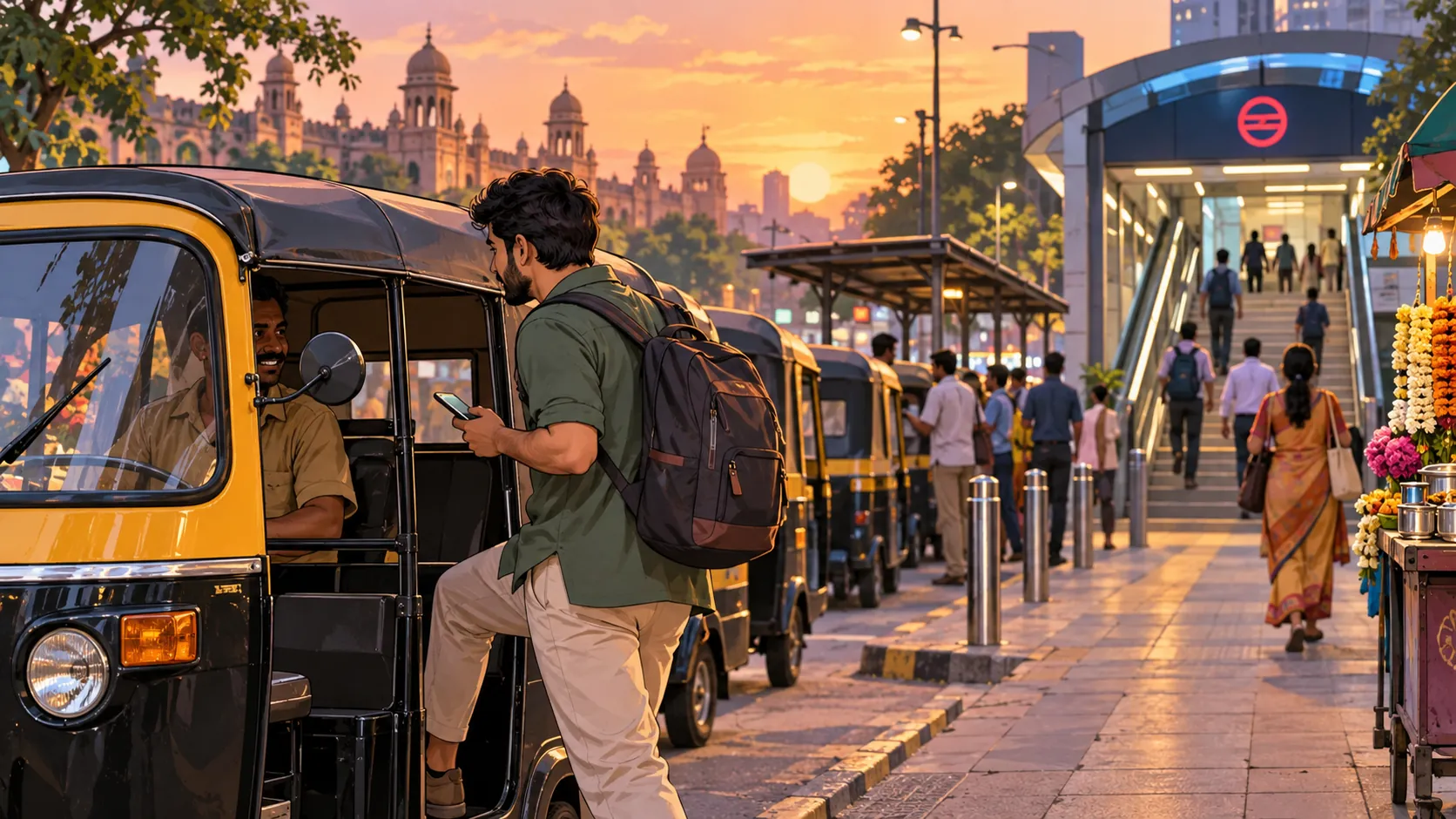
A mix of options
Indian cities offer app-based cabs and autos, metered taxis, auto-rickshaws, metro trains, local buses and shared vehicles. Each takes payment a little differently, so a flexible plan helps.
Learn the system in your first city, and adapt as you go.
Ride-hailing apps
Many visitors use ride apps, which show the fare estimate, the driver and the route before you start. Check which payment methods your account supports, since some apps accept foreign cards and others may not. Some let you pay in cash at the end of the ride.
Check the fare and payment option before you confirm the ride. Keep the app screen until the trip ends.
Meters and agreed fares
Some taxis and autos use a meter. Others quote a price before you start. If there is no meter, agree a price before you get in, and confirm whether it is for the whole car.
Ask your hotel what a normal fare looks like for your route so you can judge a quote.
Metro and local trains
Metro systems in many cities use tickets, tokens or travel cards that you can buy at stations. Cards often need a refundable deposit or a minimum top-up, and the rules vary by city.
Check the official metro site or the station counter for current details. Keep small notes ready.
Cash for small rides
For short auto rides, local buses and shared vehicles, cash is usually the easiest. Keep small notes, since drivers may not have change for large ones.
Count your change, and thank the driver. A friendly tone goes a long way.
Staying safe
Check the licence plate and driver details in the app, and share your trip with a friend if the app allows it. Avoid unlicensed offers at the airport, and use official taxi counters where available.
If a ride feels wrong, ask to stop in a busy place and get out.
Keep receipts
For app rides, the receipt arrives in the app or by email. For other rides, note the fare and time. If you are charged wrongly, these details help.
A calm, specific message to support resolves most issues.
A typical day of rides
In the morning you might book an app cab to a fort, take a metro back to your hotel and use a metered auto for a short evening trip. Each uses a different payment method, and each is simple once you know what to expect.
Start with one or two options you trust, and add others as you gain confidence.
Knowing the local habit
Cities differ. In some, autos use meters. In others, the price is agreed in advance. Ask your hotel how local rides are usually paid, and whether there is an official fare chart. Local knowledge matters more than any general rule.
Be polite, ask clearly and keep a little cash handy for the unexpected.
Fares can change
App fares may rise at busy times, in rain or at night. The estimate on screen is a guide, and the final fare can differ if the route changes. Check the details before you accept, and wait a few minutes if the price looks high.
A short wait or a short walk can make a difference.
A ZikPe note
Check ZikPe's official product information, eligibility and current terms before relying on it for a trip. Keep another payment method available and confirm that the merchant accepts the method you intend to use.
Find out more about ZikPe
Explore ZikPe on its official website. Check the current product information and terms there before choosing a payment service for your trip.
Explore the ZikPe app ↗ZikPe and Uber payments
ZikPe supports Uber payments. Check the payment option offered in your account and confirm the payee and fare before approving. This is not a tested screen-by-screen tutorial. Read the ZikPe wallet guide for the published product distinctions and current checks.